
| Sponsored Content | |
| photos contributed by | BCBSKS |
| OPEN A PDF OF THE ARTICLE |

NAVIGATING KANSAS’ NEW PHARMACY LAW
What SB 20 means for your BCBSKS health plan.
KEY TAKEAWAYS
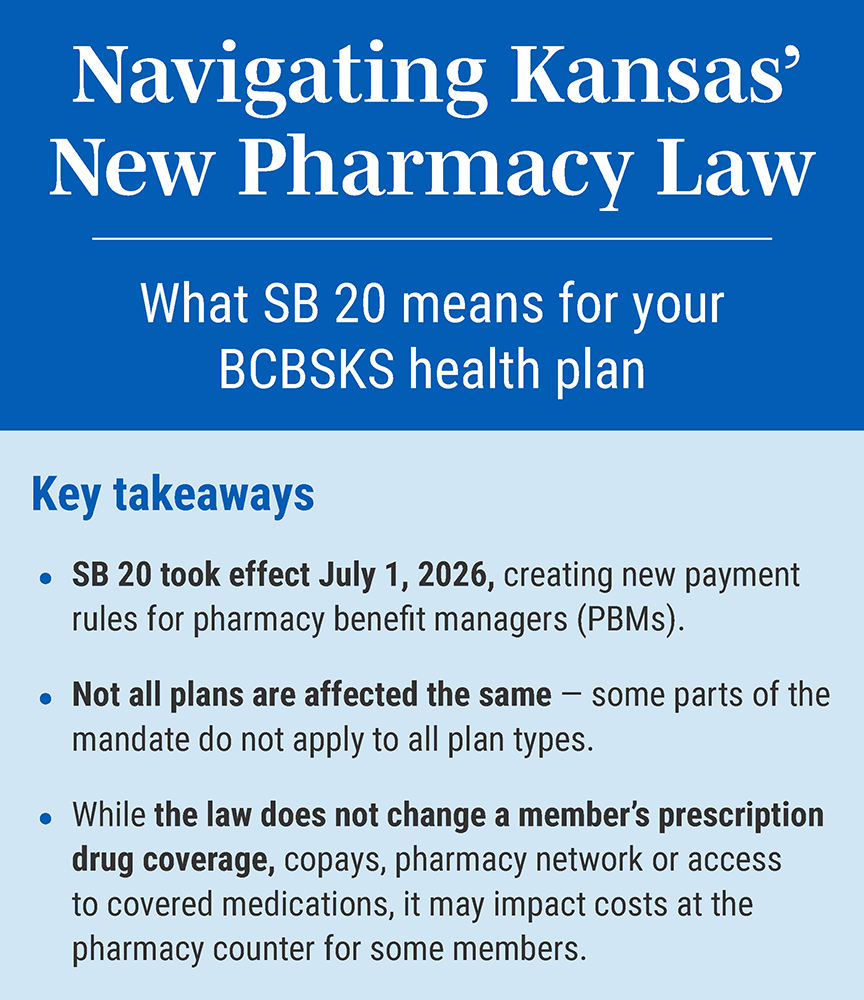
- SB 20 took effect July 1, 2026, creating new payment rules for pharmacy benefit managers (PBMs).
- Not all plans are affected the same — some parts of the mandate do not apply to all plan types.
- While the law does not change a member’s prescription drug coverage, copays, pharmacy network or access to covered medications, it may impact costs at the pharmacy counter for some members.
Health care and health insurance continue to be important conversations in Topeka and Washington, D.C. The 2026 Kansas legislative session produced a number of new laws, and one of the most relevant for employers offering health benefits is Senate Bill 20 (SB 20) which enacted the Kansas Consumer Prescription Protection and Accountability Act. Here’s a closer look at what it does and how Blue Cross and Blue Shield of Kansas (BCBSKS) is supporting employers through the transition.
A New Prescription Drug Law
SB 20 became effective July 1, 2026 and creates new rules for pharmacy benefit managers (PBMs) — the companies that manage prescription drug benefits for health plans by working with drug manufacturers, building pharmacy networks and developing formularies.
Key elements of the law include:
A state-mandated rate that PBMs pay pharmacies for each prescription
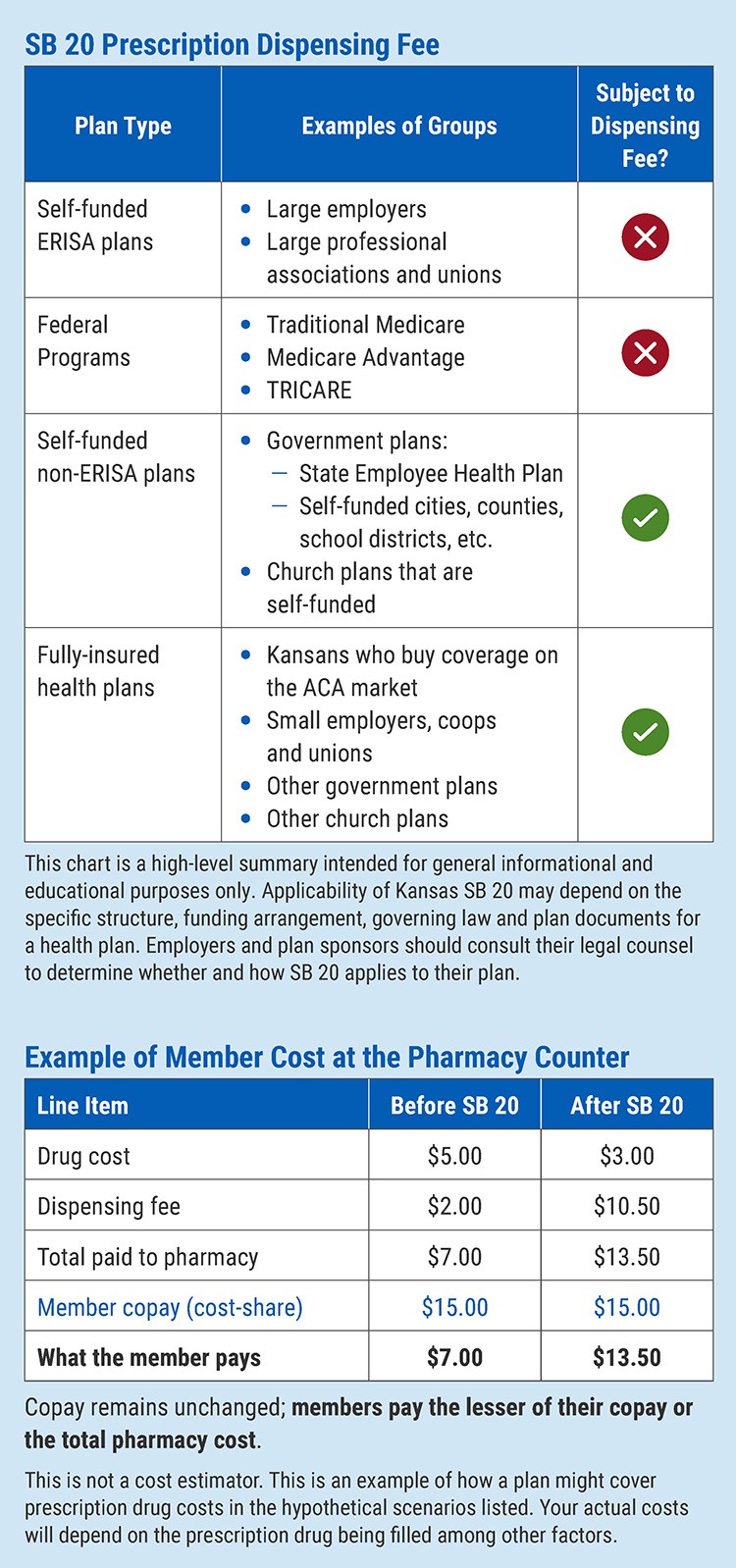
A $10.50 dispensing fee added to each prescription filled
A ban on PBMs offering “spread pricing” to health plans
Spread pricing is an arrangement when a PBM caps the amount a health plan pays for prescription drugs and places the financial risk of higher drug prices on the PBM. Not all aspects of the bill apply to all types of health plans.
What Employers Can Expect
For BCBSKS customers, current-year premiums, pharmacy benefits, network access and member cost-sharing (plan design, such as copay or deductibles) remains the same. However, some members may see increased costs at the pharmacy counter because the new state law sets the amount the pharmacy must be paid for each prescription and sets a mandatory minimum dispensing fee amount for each prescription. Members’ copay requirements have not changed, but the new state law changed the overall cost of the prescription.
Employers can count on the same coverage and service they have today through the remainder of their plan year. Looking ahead to renewals, the effects of SB 20 will vary from plan to plan. Each plan’s experience will depend on a variety of plan-specific factors.
BCBSKS partners with Prime Therapeutics, a PBM that works with other not-for-profit Blue Cross plans. We’re pleased that many of the practices SB 20 emphasizes — such as transparent pharmacy reimbursement — already align with how Prime has long operated.
Helping Employees Make the Most of Their Pharmacy Benefits
SB 20 may affect what some patients pay at the pharmacy counter. The law does not change existing copays, coinsurance percentages or out-of-pocket limits. However, it changes the amount pharmacies must be paid for prescription drugs and mandates a dispensing fee that is more than most BCBSKS health plans paid before July 1. Because our pharmacy benefits require members to pay the lesser of their copay or the actual cost of the drug, higher drug prices or dispensing fees could result in higher out-of-pocket costs for some patients.
Employers play an important role in helping employees understand and use their prescription drug coverage. Consider encouraging team members to:
Review their current prescription coverage
Discuss generic or biosimilar alternatives with their provider
Consider 90-day supplies for maintenance medications
Use in-network pharmacies
Check Explanation of Benefits (EOBs) for prescription claims
These simple steps can help employees get the most value from their benefits — regardless of how the broader prescription drug landscape evolves.
Other 2026 Legislative Updates
The Kansas Legislature also passed several other bills affecting health care, including measures that:
Allow pharmacists to initiate certain therapies and dispense emergency refills
Allow optometrists with additional training to perform certain surgical procedures
Create a “bell-to-bell” policy on student mobile phone use in K-12 schools
Establish a Specialty Practice Student Loan program to support medical students who commit to practicing full-time in underserved areas of Kansas
Create new “portable benefits” accounts that allow independent contractors to receive benefits contributions from the companies that hire them
Advocating for Kansas Employers — Right Here at Home
As the only local, not-for-profit health insurer in Kansas, BCBSKS does something our competitors don’t: we show up at the Statehouse on behalf of Kansas employers, advocating for policies that support affordable, sustainable health coverage.
Kansas businesses are among the most impactful voices in the Statehouse. If your business would like to stay involved in state policymaking, please contact us at government.relations@bcbsks.com.
Blue Cross and Blue Shield of Kansas is an independent licensee of the Blue Cross Blue Shield Association.
BLUE CROSS®, BLUE SHIELD® and the Cross and Shield symbols are registered service marks of the Blue Cross Blue Shield Association, an association of independent Blue Cross and Blue Shield Plans. Blue Cross and Blue Shield of Kansas serves all Kansas counties except Johnson and Wyandotte.