| story by | |
| photo by | Steven Hertzog |
| OPEN A PDF OF THE ARTICLE |
These bioscience companies create products right here in Lawrence they hope will help prevent or treat illnesses all over the world.
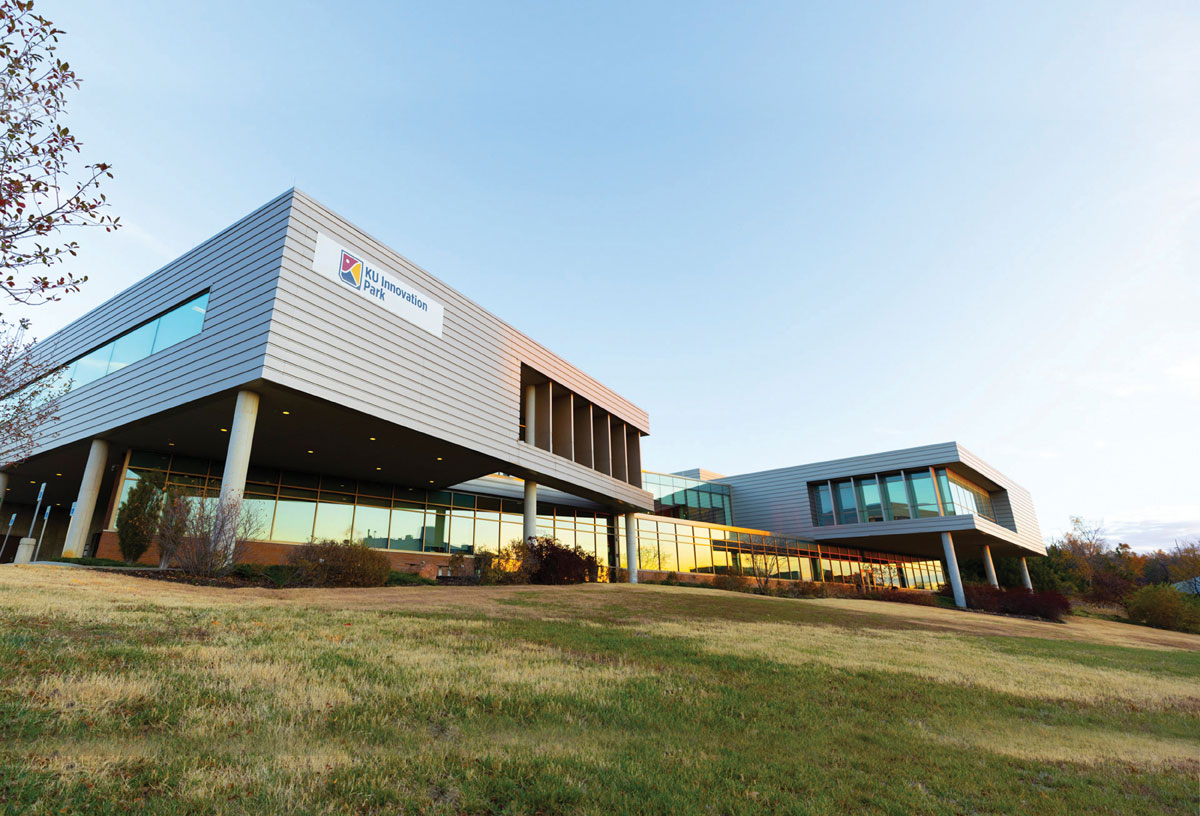
KU Innovation Park – phase 1 & 2. KUIP is now in the process of building phase 4. Photo courtesy of KUIPP
Thousands of Kansans work in the biosciences, and the state continues to grow bioscientific businesses and increase relevance in the field. In Lawrence and Douglas County, bioscience startups have what is now a well-established incubator at KU Innovation Park (KUIP).
The startup companies’ research and scientific achievement at KUIP transcend geographic borders, and the discoveries and innovations forge new pathways in bioscience over time.
What follows are profiles of three companies whose ideas, technology and science already are emanating nationally and internationally. Design-Zyme holds patents for ongoing vaccine development in areas such as Lyme disease and opioid-use disorder. Oak Therapeutics is developing oral paper strips as an alternative way to administer medicine, whether for medical reasons or for simplifying portability and storage. Vytas Bio is working to develop noninvasive early cancer screenings using urine samples for earlier detection of typically difficult-to-detect cancers such as ovarian and pancreatic. Each company is based at KUIP and building from there.
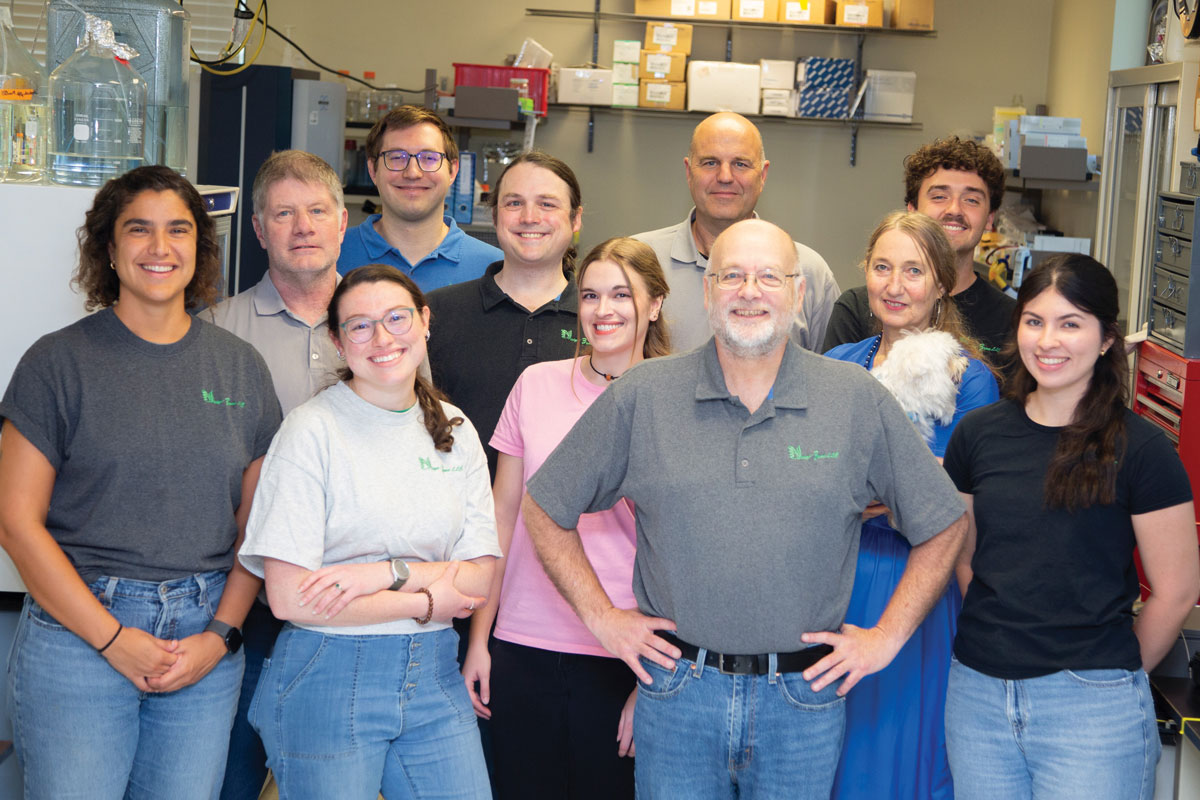
The Design-Zyme team – the chemists, immunologists, biochemists, animal physiologists and business development staff behind the Company’s vaccine pipeline.
Design-Zyme
Design-Zyme specializes in creating enzymes and vaccines for ailments or diseases that aren’t being addressed by large pharmaceutical companies for any number of reasons. With three U.S. patents and 13 more U.S. patents pending, Design-Zyme is blazing a trail of discovery and solutions using polyvalent displays to create vaccines for opioid-use disorder (OUD), Lyme disease, Kush usage and fescue toxicosis.
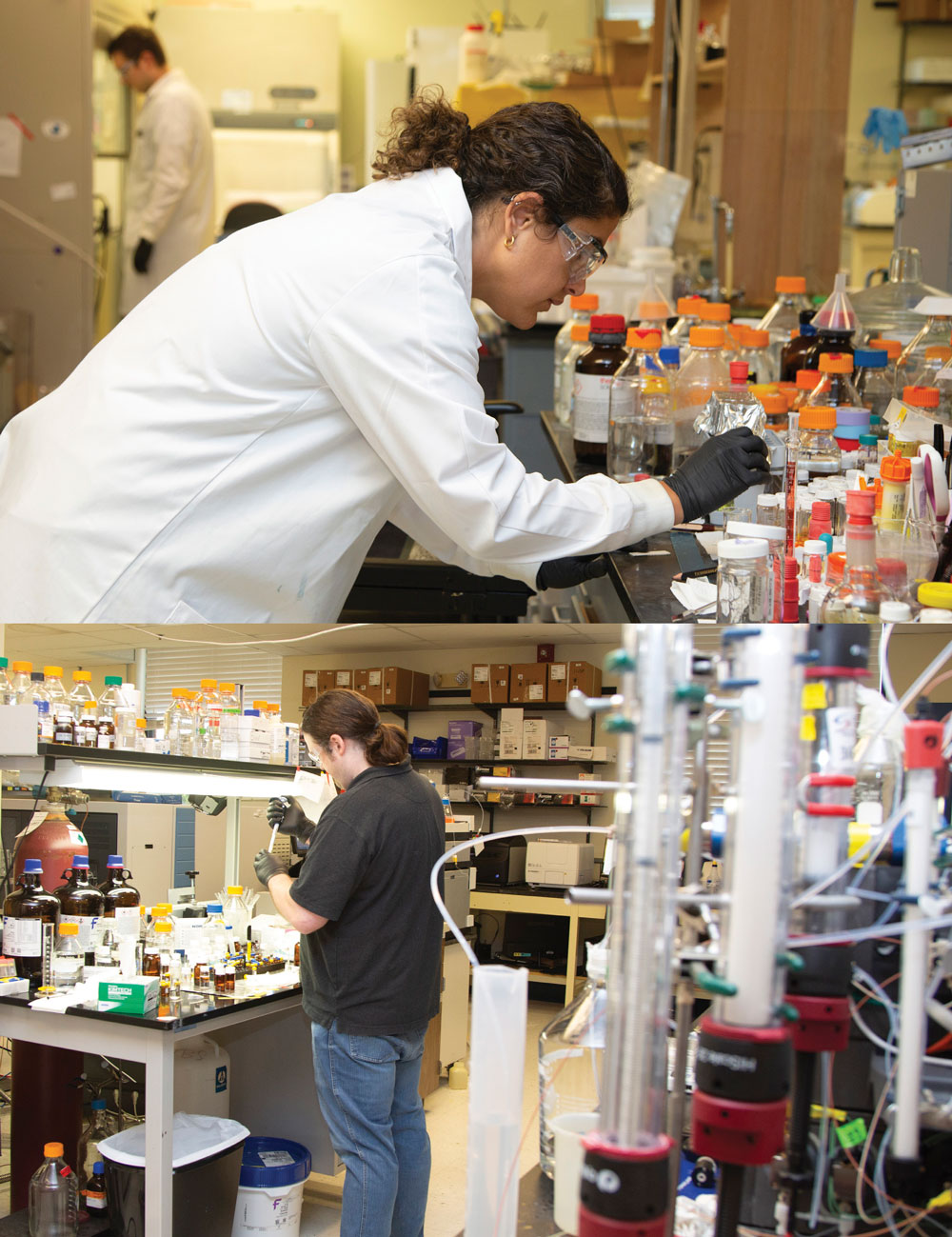
Dr. Julia Galvez at the bench- Every vaccine candidate starts here. Design-Zyme designs and synthesizes its vaccine components, including its haptens, in-house. This allows the Company to iterate on vaccine structure far faster than an outsourced model allows
Chief Science Officer Dr. Dwight Deay III preparing a sample for bioanalysis –The melding of synthetic chemistry and structural biochemistry supports the systematic exploration that turns an hapten idea into a new vaccine candidate.
Design-Zyme scientists engineer haptens that attach to carrier proteins and create an antibody response. The company’s technology is for novel types of vaccines, which is why Design-Zyme is continually patenting its methods. Media attention and changing attitudes about vaccines in the U.S. reinforce the need for safeguards and adherence to the Food and Drug Administration (FDA) processes.
“Everything we do is exceedingly safe, and safety is right at the top of our process,” CEO Pete Petillo says. “For example, it would take hundreds to thousands of times the vaccine dose to get any side effects.”
The company’s opioid-use disorder vaccine has the potential to diminish the high that users feel when using opioids, which Petillo says could lead to improved morbidity and mortality rates.
“It could be used for active OUD to help in recovery or prophylactically to prevent becoming addicted. The vaccine is not curing OUD but rather preventing one underlying element of addiction,” he says.
The Lyme disease vaccine came to fruition as an offshoot of the company’s work during the COVID-19 pandemic. Design-Zyme wanted to apply its platform to a potential COVID-19 vaccine and needed a way to test it without working with the COVID virus itself. So Petillo says they developed polyvalent peptide and protein technology, and developed a working Lyme disease for testing. Once the pandemic diminished, Design-Zyme’s team continued its work with Lyme disease using a National Institutes of Health-funded contract. Their vaccine targets the Lyme disease bacteria once it is disgorged into the human body, in contrast to other concurrent vaccines that target the bacteria while it is inside the infecting tick.
The OUD vaccine and the Kush vaccine, which addresses a drug-use disorder in western Africa, are seeking more funding with hopes to pursue clinical trials in early 2028, Petillo says. The Lyme disease vaccine is probably nine months to one year behind that, he adds.
LOCAL MATTERS
Our Local Advertisers – Making a Positive Impact
“The testing process is the cheapest process. A clinical trial is much more expensive,” Petillo says.
He appreciates both the environment and the facilities at KUIP, where Design-Zyme has been since 2015. The laboratories can accommodate the latest technologies as those technologies develop, and the facilities have allowed for growth, as the company has expanded from 400 square feet of space to its current 3,100 square feet.
Ultimately, Design-Zyme’s success is attributed to a combination of consistent funding from the Department of Defense’s Defense Advanced Research Projects Agency (DARPA), the NIH, the National Institute of Allergy and Infectious Diseases and the Wellcome Leap and its scientific team’s work.
“Our team is passionate about the work they do but also very, very good at what they do,” Petillo says.
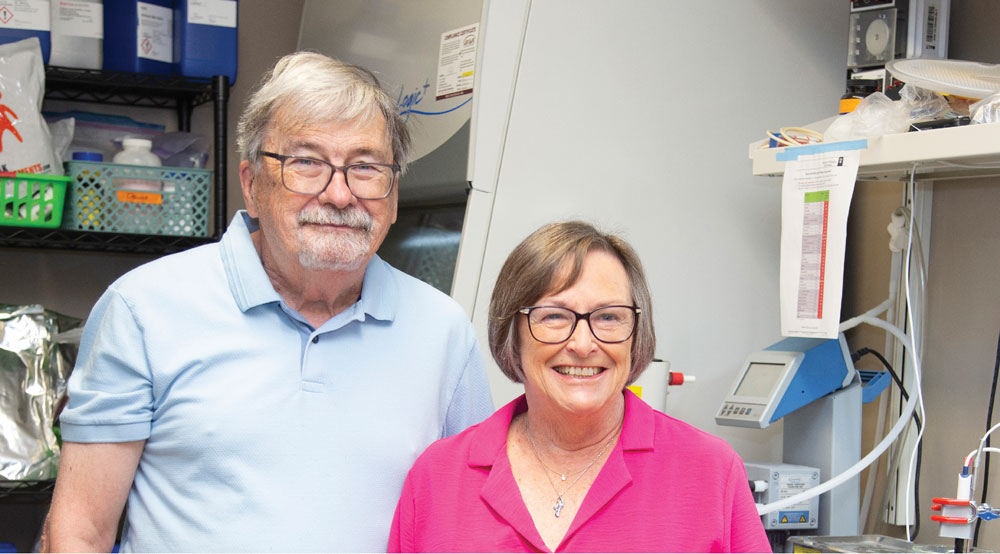
Oak Therapeutics’ executive team: Edward Maliski, PhD, CEO, and Sally Maliski, PhD, Chief Communications Officer. Not pictured: Gerhard Apfelthaler, PhD, Chairman of the Board and CFO.
Oak Therapeutics
“If people don’t take their medicine, it doesn’t do them any good.”
That is something that Oak Therapeutics CEO and Chief Science Officer Ed Maliski often says as a basis for the company’s work in creating oral dissolvable strips as a way to administer medications. If people cannot gain access to their medicine or can’t physically swallow it, they won’t be able to take their medicine.
The strips with embedded medication address many barriers to taking medicine, some of which are medical and others of which are logistical, such as efficient storage and transportation of the medicines. No water is required to ingest the medicated strips, and they are lightweight to ship and don’t need refrigeration. So they can more easily reach populations in underdeveloped countries or remote locations.
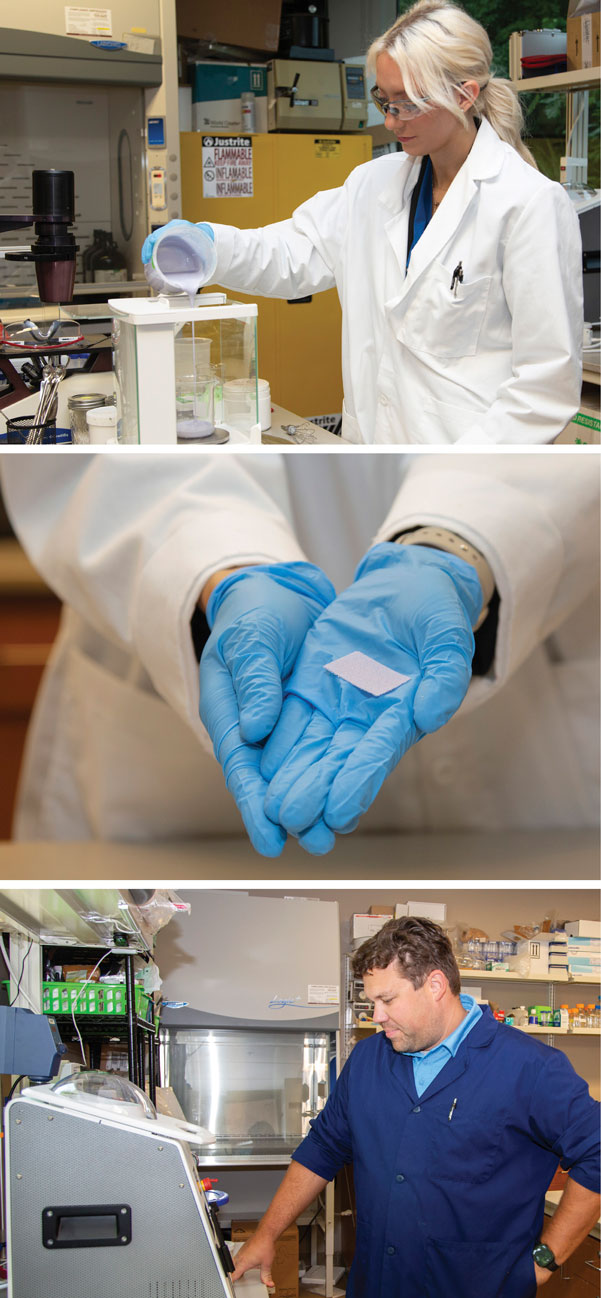
Top to bottom:
Research Scientist Lauren Staus weighs a slurry that forms the basis of the oral strip. At this stage, the material has a consistency similar to cake batter
Xerostrip is an example of a finished product. Used during sleep, it helps reduce dry mouth, an important concern for cancer patients receiving chemotherapy or radiation therapy to the head and neck
Senior Research Scientist Zachary Nicolay tests new equipment designed to increase manufacturing efficiency and reduce production costs.
“Complicated answers are easy to come by. Finding something simple that works is more difficult,” Maliski explains.
Oak Therapeutics didn’t set out to be a company that specialized in oral dissolvable strips, but Maliski says they came to that solution by talking with the people involved in prescribing, administering and taking medications.
Treating pediatric latent tuberculosis (TB) is a prime example of how the strips could greatly increase the likelihood that patients will take their medicine. Usually, treatment involves taking multiple pills every day or every week for at least four to six months—and the medication has a terrible taste, says Sally Maliski, the company’s vice president of health-care relations. Though there are pediatric TB patients in the U.S., there are many more in developing countries, where the flavored strips can be easily shipped. The oral dissolvable strips medication is both easily distributable and masks the nasty taste. With hundreds of thousands of children dying from TB annually, distributing life-saving medicine efficiently that they will actually ingest is mission critical.
“What we’re talking about with TB deaths is the daily equivalent of three 747s, with a child in every seat, crashing. How many days would you let that happen?” Ed Maliski asks.
Thus far, Oak Therapeutics has brought one of its oral dissolvable strips to market, a slow-release nutraceutical to treat dry mouth called Xerostrip.
LOCAL MATTERS
Our Local Advertisers – Making a Positive Impact
For future products and the path ahead, Ed Maliski says the company is working to build efficiency for both the scientific end of encapsulating the pharmaceutical ingredients on the different types of strips and for the regulatory end of navigating the drug approval and clinical trial processes.
“If we can get to where we use the same encapsulant for different medications, then that makes every strip all the same. So we’ll be able to adapt what we’ve learned to other products and achieve efficiency in making and manufacturing,” he explains. “We’re working toward efficiency in distribution, as well.”
Both Ed and Sally Maliski rave about the networking, community and expertise they have encountered at KU Innovation Park since arriving in 2015.
“Without these people, we would’ve been out of business. They take great pride in seeing us become successful. They never gave up on us, and it’s starting now to pay a dividend for us,” Ed Maliski says.
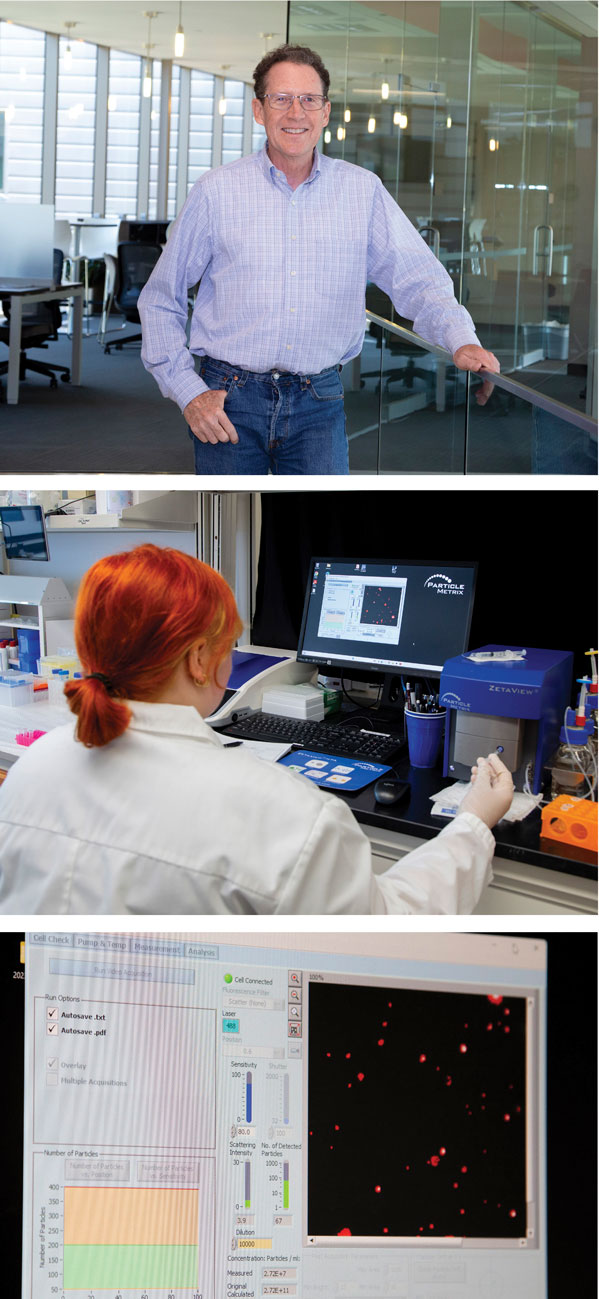
Top to bottom: Dave Alburty, Captain & Principal Investigator
Nano tracking analysis process for the exosomes
Human cancer exosomes being analyzed.
Vytas Bio
Pancreatic and ovarian cancers, among others, are difficult to detect, so by the time patients receive their diagnosis, the cancer is often too late-stage to treat with much hope of long-term survival.
What if people could screen for those stealth cancers and be diagnosed with them long before the cancer produces symptoms and with enough time to either significantly slow or prevent the cancer from growing? Early, painless, noninvasive cancer screenings are precisely what Vytas Bio is working to develop. Urine tests could detect fallopian tube cancer, kidney cancer, ovarian or pancreatic cancer, and give the patient time to develop a treatment path with hopefully better odds of survival.
“Getting diagnosed earlier and treating the cancer earlier would shrink the amount of suffering of women, families and doctors. Plus, they would save time and money by treating the cancer early instead of late-stage treatments,” says Vytas Bio founder David Alburty.
Urine contains what Alburty calls “cell garbage,” shed by every cell in the body. Scientists are now coming to understand that each of those submicroscopic particles, called exosomes, holds unique information that can be accessed and tested. Exosomes carry waste from cancerous cells that can be traced back to specific tissues—all of which can be detected from urine—so there is no complicated or invasive procedure involved.
Alburty says he founded Vytas Bio, his fifth startup, four years ago as a basis for detecting pancreatic and kidney cancers. He has since begun exploring ovarian and fallopian tube cancers, as well, because women’s health issues tend to be underserved by medical research.
One of the biggest challenges of working with the exosomes in urine tests, Alburty says, is that the particles themselves are so tiny. They are smaller than bacteria, so accessing biomarkers and analyzing them requires specialized laboratory equipment. Coincidentally, he found a research group at The University of Kansas (KU) that is trying to identify similar types of biological markers, so he and that group have shared some samples and have collaborated some.
His entrepreneurial experience has served him well as he forges new pathways with ideas and science. Detailed planning is essential, but so is managing when the plan is disrupted or destroyed. It is a balancing act.
“You have to do early work to know it’s feasible. If you don’t have a goal and a plan, you’re adrift. You have to keep your sense of urgency and drive, because so much is happening so fast, but also it takes a lot of patience and perseverance,” he says.
The Vytas Bio pipeline hopefully eventually will include developing one urine test after another to the market for various cancers and possibly other types of illnesses, Alburty says.
Vytas Bio has been at KU Innovation Park almost four years. Initially, Alburty was interested because of the specialized equipment that already was on-site. But he says colleagues at KUIP and at the broader University have helped propel his scientific explorations and access to other opportunities.
“I have proximity to KU and scientists, specialized facilities, room to expand, a community of other entrepreneurs, and we’re surrounded by the coolness of Lawrence,” he says.