
| story by | |
| photos by | Steven Hertzog |
| OPEN A PDF OF THE ARTICLE |
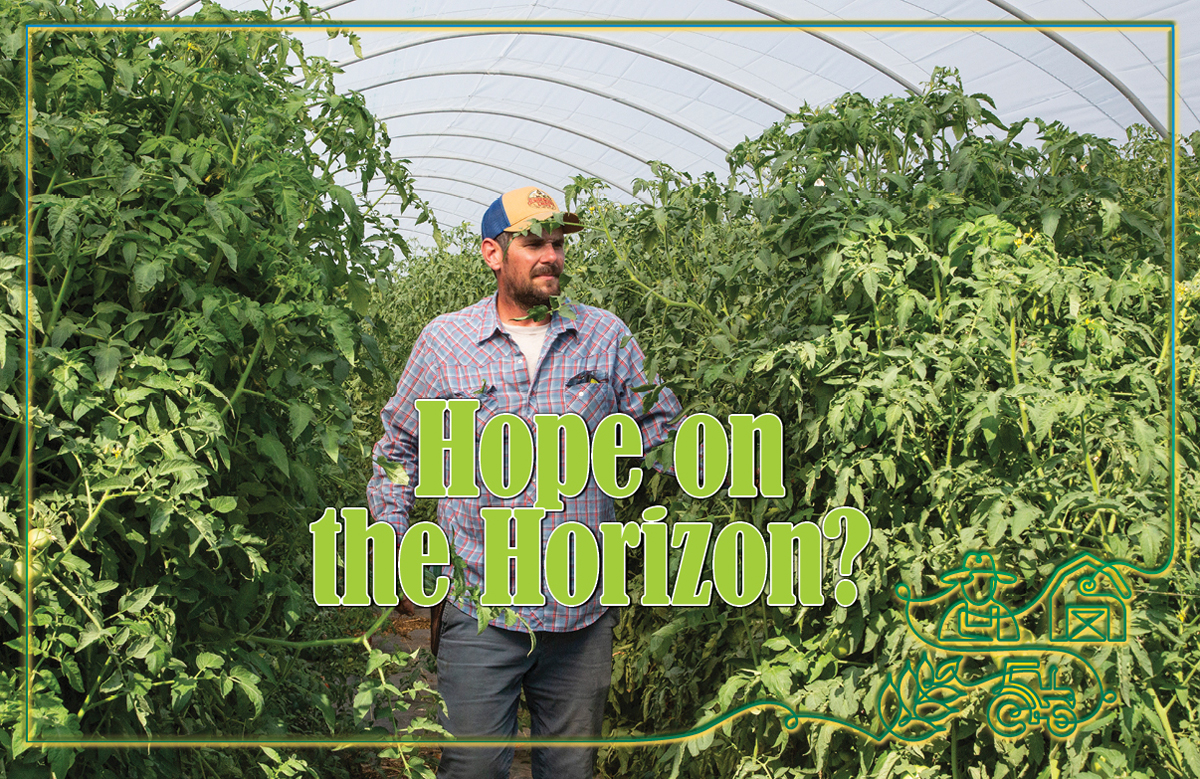
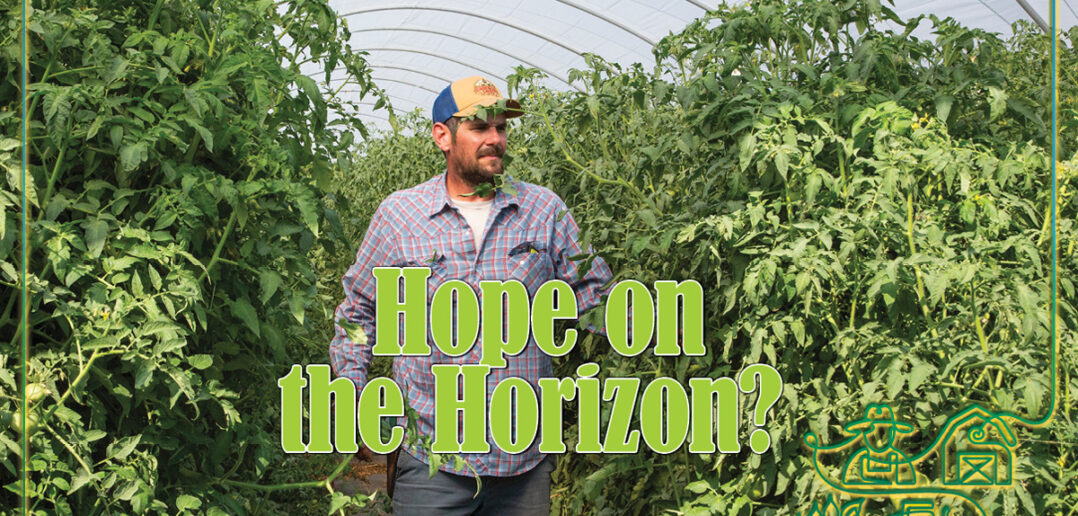
Scott Thellman inspecting his produce on their family farm
Kansas farmers weigh the risks and rewards in a new era of agriculture.
Stressed, uncertain and hopeful. That’s how Scott Thellman, 34, describes farming in Kansas right now. The first-generation farmer runs Juniper Hill Farms north of Lawrence, one of the largest organic vegetable operations in the state.
 Farm to School programs bring healthy, nutritious foods to our school cafeterias, teach our students about the importance of agriculture, and help establish lifelong healthy habits for the next generation of Vermonters.
– Phil Scott
With 70 acres of produce and a 13-person crew, Thellman has achieved what few young producers have: a sustainable, full-time farming career. But that livelihood is growing harder to maintain.
“We’re being asked to plan out our whole season the year before, and then what was planned out and known either dries up or disappears,” Thellman explains. “The most difficult part right now as a farmer is the uncertainty.”
That uncertainty is driven not only by weather and market fluctuations, but also by new national policies. The recently passed One Big Beautiful Bill Act (OBBBA), signed by President Donald Trump, revises key provisions of the 2018 farm bill and redefines agricultural priorities through 2031.
And with it come positives and negatives.
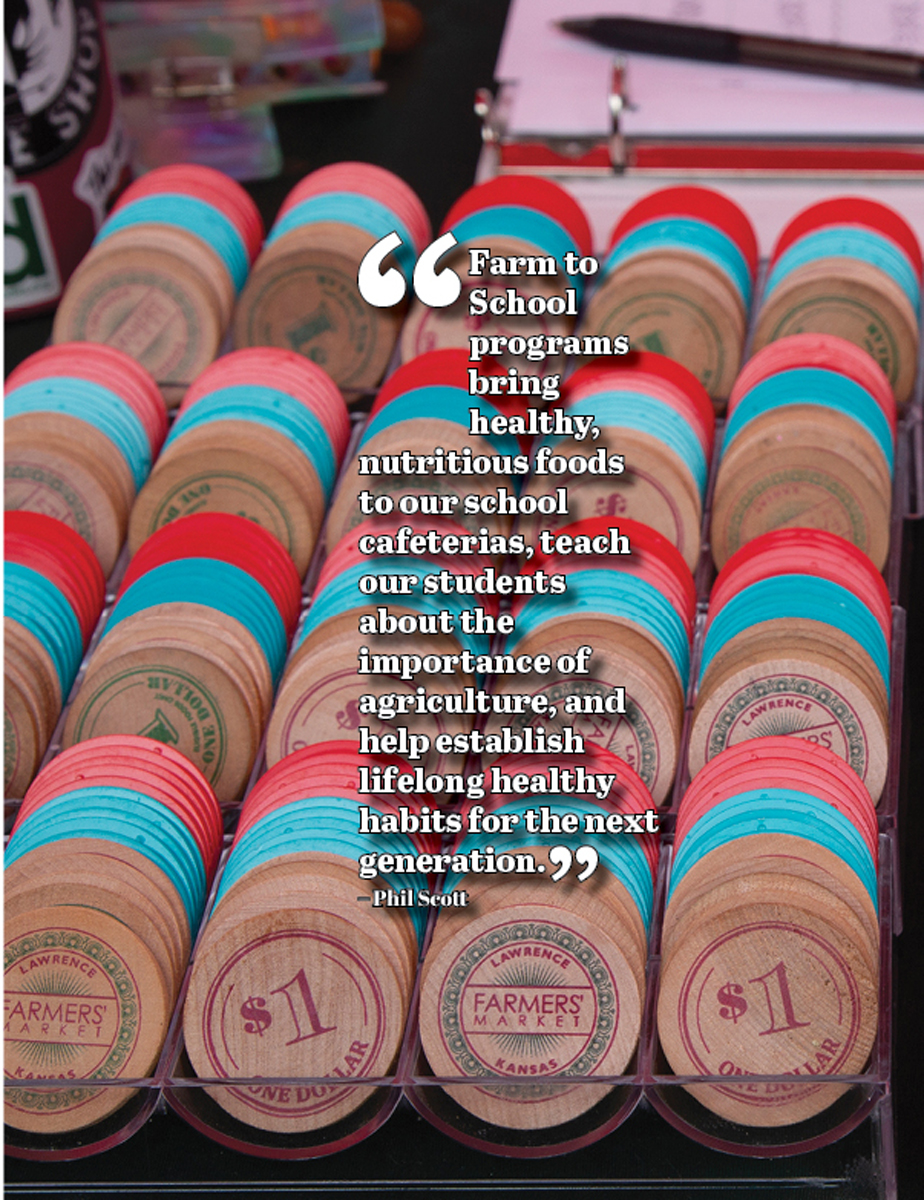
SNAP with quote by Phil Scott
The Ins and Outs
OBBBA strengthens the safety net for farmers and ranchers by updating crop insurance rules and expanding commodity support programs. One key change allows farmers who earn more than 75 percent of their income from agriculture to bypass previous income limits, unlocking larger federal subsidies, especially for full-time, large-scale producers.
“Overall, this bill enhances risk management for both small and large-sized farms,” says Robin Reid, an Extension economist at Kansas State University. She notes, however, that most payments won’t be distributed until October 2026.
Kansas has approximately 56,000 farms, but the bulk of production comes from a relatively small number of those. In Douglas County, there are nearly 1,000 farms, and 87% bring in less than $100,000 a year, according to the U.S. Department of Agriculture. Yet most federal subsidies go to the largest operations. Since 1995, Douglas County farms have received approximately $55 million in federal aid, 78% of which has gone to the top 10% of recipients, according to the Environmental Working Group.
That trend is likely to continue, says Tom Buller, executive director of the Kansas Rural Center. He believes OBBBA’s benefits are skewed in favor of the most prominent players in agriculture.
LOCAL MATTERS
Our Local Advertisers – Making a Positive Impact
Under the new law, annual payment caps for commodity programs were raised from $125,000 to $155,000. Farmers who previously exceeded the $900,000 adjusted gross income limit are now eligible as long as most of their income comes from farming. The government also increased price guarantees for crops such as corn and soybeans, but these changes primarily benefit traditional commodity growers.
Crop insurance support was also expanded, with the government now covering a larger share of premiums. However, Buller notes that access to affordable insurance remains limited for smaller, diversified farms, particularly those that grow fruits and vegetables.
“There weren’t really any provisions that would help smaller farmers unless they’re growing those [commodity]crops,” he says.
The new law also includes tax breaks designed to help family farms remain in the family. It keeps the federal estate tax exemption at $15 million per person, which means most farms won’t owe estate taxes when passed down to the next generation. It also lets farmers immediately deduct up to $2.5 million in equipment or infrastructure purchases, a big help for those investing in new tractors, barns or other improvements.
A bright spot for farmers of all sizes is the continuation of conservation funding from the Inflation Reduction Act, according to the American Farm Bureau Federation. Programs such as the Environmental Quality Incentives Program (EQIP) and Conservation Stewardship Program (CSP) will maintain enhanced funding through 2031. That matters because these voluntary programs help producers implement practices that improve soil health, reduce erosion, conserve water and build long-term resilience to climate and weather extremes. Unlike commodity subsidies, these programs are accessible to both small and large farms, regardless of the crops they grow.
Perhaps the most controversial aspect of OBBBA is its $180-billion cut to the Supplemental Nutrition Assistance Program (SNAP.) These reductions come through tightened work requirements and a freeze on how often SNAP benefits can be adjusted for inflation.
“If this cost is not allowed to increase with inflation, we will see fewer people able to afford the most basic meals for themselves and instead have to make the most thrifty and simplified food decisions, often which end up being highly processed meals instead of fresh, whole foods,” says Emily Lysen, director of development for the Lawrence Farmers Market.
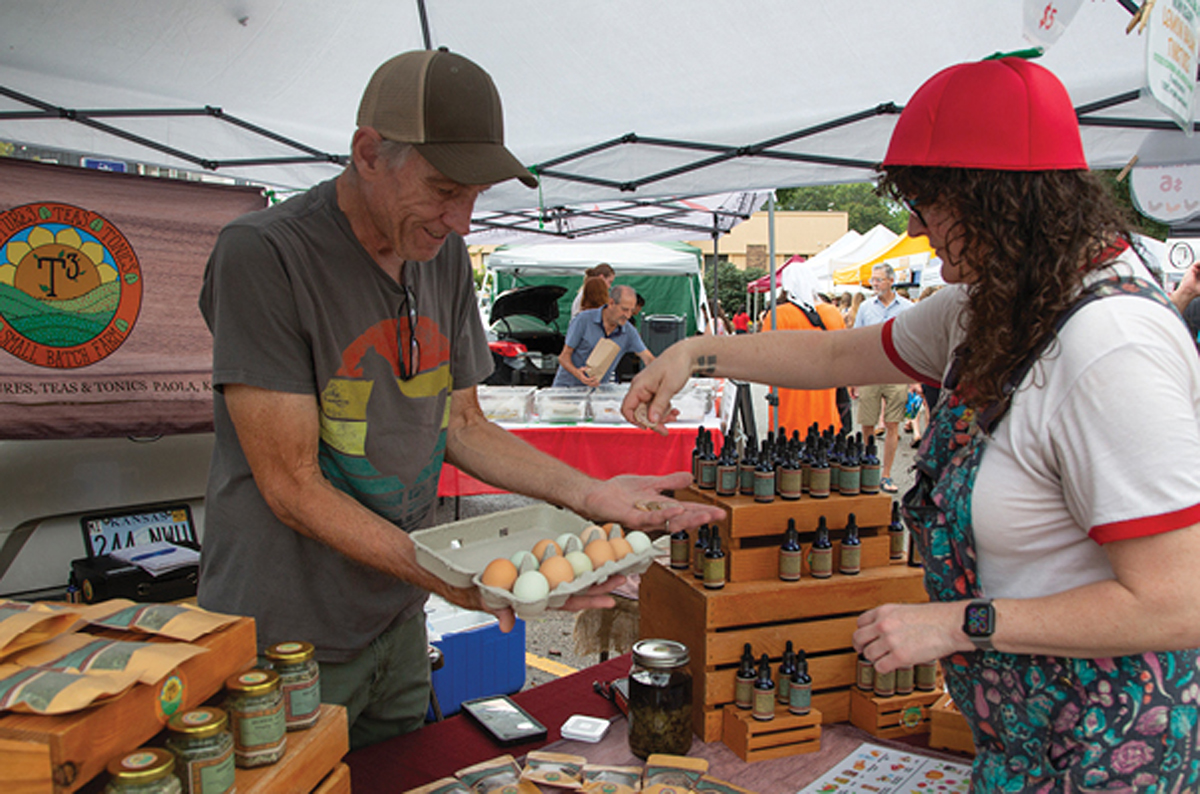
Director of Marketing for the Lawerence Farmer’s Market, Emily Lysen showing the use of SNAP tokens to purchase eggs and fruit at the Farmers’ Market
Close to Home
That worries farmer Thellman.
“We have a farm bill that is kind of promoting … specialty crop production, better access to food,” he says, “but then on the reciprocal side of that, we are also facing the largest cuts to SNAP in our nation’s history.”
In Douglas County, where 6% of the population is enrolled in and 30% are eligible for SNAP, Lysen says the cutbacks could deepen food insecurity.
“With cuts and changes to eligibility requirements … we anticipate fewer SNAP users,” she explains. That translates to less money spent at local markets and with local farmers.
The Lawrence Farmers Market had been a model for success. Its Double Up Food Bucks program, launched in 2016, matched SNAP purchases dollar-for-dollar and recently added a similar match for protein items. Each week, up to $2,000 in SNAP dollars are redeemed at the market, representing about $66,000 in local food sales that could now be lost.
“All SNAP and matching dollars go directly to farmers,” Lysen notes. “That’s $66,000 in fresh, local food not being eaten by our community members.”
Grocery stores like The Merc Co+op (The Merc) are bracing for ripple effects.
“Cuts to SNAP, particularly at this scale, will be deeply felt,” says Seth Naumann, general manager. “When families lose access to those benefits, it’s not only a personal hardship but a loss of purchasing power in stores like ours and less revenue circulating in the local economy.”
The Merc plans to expand its discount program for low-income customers, MercShare, but private efforts can’t replace federal funding.
“Decreasing access to SNAP harms the families who rely on support, the farmers who grow that food and the community as a whole,” Naumann says.
For now, Kansas farmers continue to plant, harvest and hope.
“We always like to think on the bright side and look forward, not back,” Thellman adds.
Even in uncertain times, that optimism may be farmers’ most enduring crop.