
| story by | |
| photos | Douglas County Historical Society, Watkins Museum of History |
| OPEN A PDF OF THE ARTICLE |
According to personal abolitionist accounts, many slaves traveled through town along the Underground Railroad to their freedom.
Home Improvements and Services
In Kansas Territory (1854–1861), the underground railroad was active in helping slaves, primarily from Missouri, escape their owners and ultimately make their way north, many eventually settling in Canada. Numerous “conductors” gave accounts of the number of slaves they brought to freedom. Not much is known about a man named John Bowles, but he wrote to Franklin B. Sanborn, secretary of the Massachusetts State Kansas Committee, which provided support for free-staters settling in Kansas. In a letter from Lawrence dated April 4, 1859, Bowles wrote:
- “To give you an idea of what has been done by the people of this place in the U.G.R.R., I’ll make a statement of the number of fugitives who have found assistance here. In the last four years I am personally known to the fact of nearly three hundred fugitives having passed through and received assistance from the abolitionists here at Lawrence. Thus you see we have been continually strained to meet the heavy demands that were almost daily made upon on to carry on this (not very) gradual emancipation.”
John E. Stewart, a former Methodist minister, lived south of Lawrence on the Wakarusa River, He, along with his supporters, were well-known for forcefully driving proslavery settlers from the Kansas Territory. On Dec. 20, 1859, Stewart wrote the following to Thaddeus Hyatt, a wealthy merchant in New York who had been providing financial support to the free state settlers:
- “I must start on the road again at nightfall to seek a place of safety for two of my black brethren that I have brought thus far from the land of bondage. … I have spent a great portion of my time in this way, & have brought away from Mo. fourteen, including one unbroken family, of which I feel rather proud, & very thankful that I have been able to do so much good for the oppressed.”
LOCAL MATTERS
Our Local Advertisers – Making a Positive Impact
James H. Lane was one of the best-known abolitionists to free slaves, and he was elected to serve as one the first U.S. senators after Kansas was admitted to the union in 1861. During the territorial era, he was active in the military and held the title brigadier general. He marched his brigade through Missouri, and a number of slaves joined his forces. When asked what they should do with the slave in their camp, the chaplain to Lane’s troops The Rev. Hugh Dunn Fisher responded, “all the men were in the army, and the women and children in Kansas needed help to save the crop and provide fuel for winter.” He suggested they send the Negroes to help the families in Kansas. Lane and his troops rescued 218 slaves to keep them from being captured by guerrilla forces in Missouri. Lane’s 14 soldiers and 30 escaped slaves traveled day and night in a caravan. They primarily ate cold food until they stole three cattle from a herd they came across, which they killed and cooked. When Lane and his men crossed into Kansas, Fisher proclaimed that all of those slaves were “forever free.” The Negroes celebrated Fisher’s proclamation, and Fisher later claimed that these were the first slaves formally freed.
After his expedition through Missouri, Lane returned to Washington and to his role as a U.S. senator from Kansas. He reported to the Senate on May 15, 1862, that he had helped free 4,000 slaves from Missouri and Arkansas. Lane made numerous claims about how many slaves he helped escape, including a total of 6,400 just two months after his May 1862 speech in the Senate. In June 1862, he told the New York Emancipation League that he had helped another 2,500 slaves receive freedom in the past few months. He also reported that he had 1,200 Blacks in his brigade at one point.
These statistics are amazing illustrating so many Negroes were freed by the Underground Railroad and various abolitionist supports. The details of the hardships they encountered while escaping and the constant fear of being captured and returned to slavery can only be imagined.
The Rev. Richard Cordley, pastor of the Plymouth Congregational Church, in Lawrence, recorded the experiences of a young woman named Lizzie. His account gives us a look at one former slave’s life as she adjusted to freedom. He said:
- “She is a very likely young woman and has a great horror of being taken back to slavery. At the same time we do not like to send her to Canada until arrangements can be made for her. She would be entirely alone. So we have been keeping her here in Lawrence. She has been at my house for several weeks, and it is thought wisest to find another home for her. It is not best for her to be too long in one place. Would you take her into your house for a few weeks until other arrangements can be made?”
The Cordleys agreed, so Lizzie moved in with them. She was quiet and never bothered anyone. She had been trained as a house slave, so she helped with the housework. She also cooked a variety of meals for the family. She became well-known among the Cordleys’ friends for Lizzie cake, which everyone thought was delicious. She was excellent at housework, and the Cordleys were dreading the time when they had to move her somewhere else. She lived with other families for several months. However, her master found out where she was and was determined to return her to his home. Arrangements were made to avoid her recapture, and she left the house with her rescuers after midnight. Slavers were in the area, so Lizzie’s rescuers had to avoid them. The Cordleys eventually learned Lizzie had made it to Canada and had a good life there.
LOCAL MATTERS
Our Local Advertisers – Making a Positive Impact
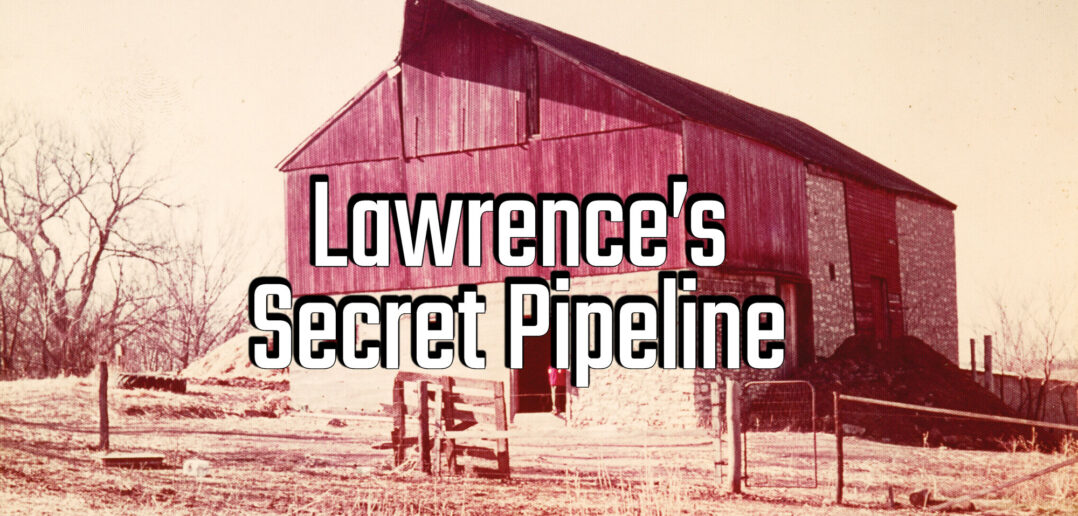
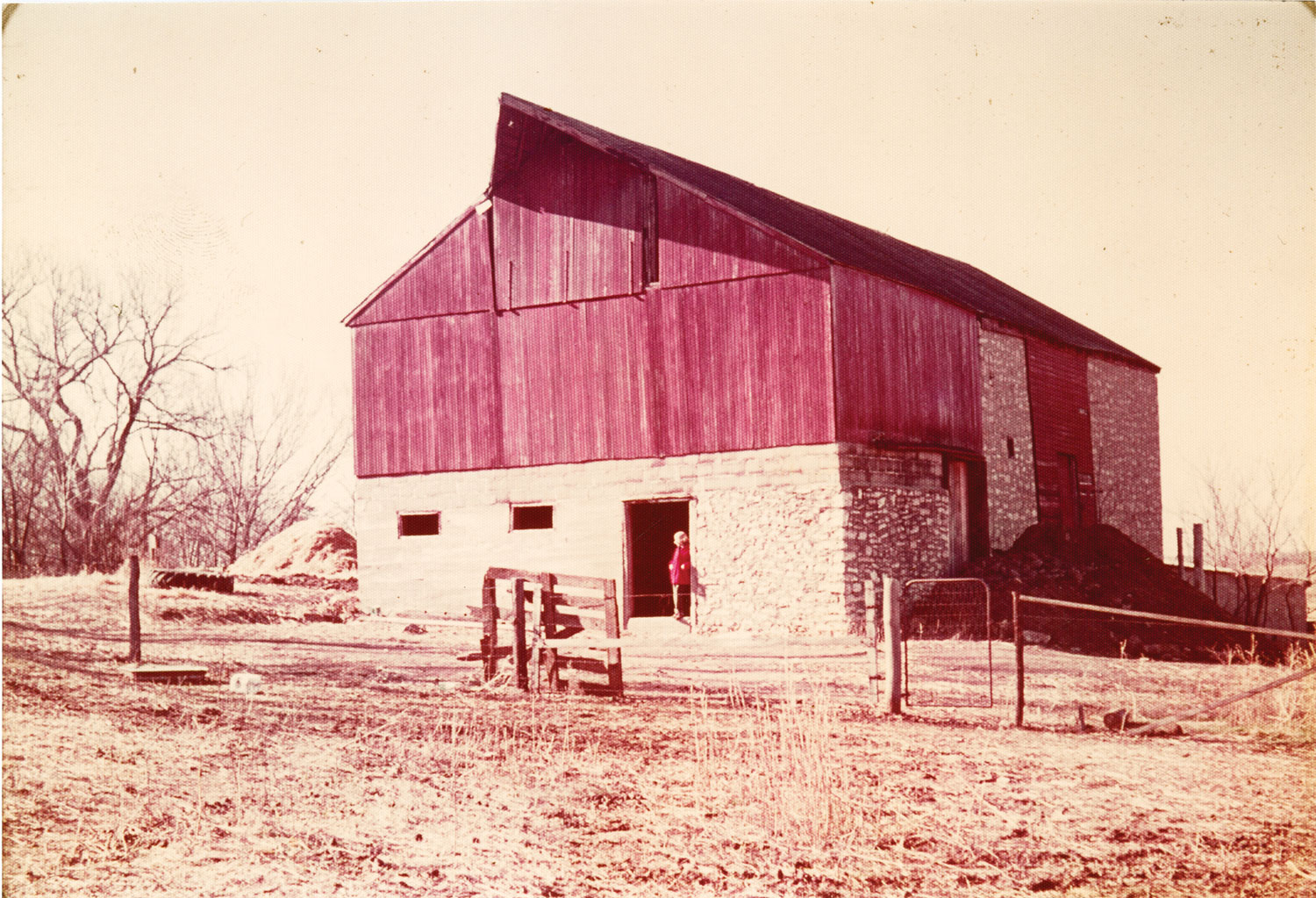
One prominent structure connected to the Underground Railroad still remains in Lawrence. Grover Barn, now a fire station on West 23rd Street, was a stop on the railroad. Joel Grover was born in Springfield, New York, on Aug. 5, 1825, and died in Lawrence on July 28, 1879. He came to Lawrence with the second party of the New England Emigrant Aid Company. He began building the barn in January 1858 and finished its construction in October of the same year. The barn became the gathering place for fugitive slaves who had been staying with various Lawrence families to begin the last stage of their journeys north.
Annie Soule Prentiss wrote that her brother Silas was friends with John Brown and accompanied him on many of his efforts to bring slaves to Kansas. She wrote: “Brown came to our cabin one night with thirteen slaves, men, women and children. He had run them away from Missouri. Brown left them with us. Father would always take in all the Negroes he could. Silas took the whole thirteen from our home eight miles to Mr. Grover’s stone barn … the Negroes stayed there, hidden in the barn for several days, when a chance offered and they were taken still further toward freedom by another agent of the underground.”
Another account of activities at Grover Barn was written by Richard Hinton, a correspondent for leading northern newspapers while he was in Kansas Territory. George B. Gill, mentioned by Hinton, was a close associate of John Brown and led a number of parties of fugitive slaves north from Kansas. Gill mentioned that the “colored folks” cooked up a supply of food for the journey before they left the barn on Jan. 28, 1859.
The major resource for this article was a compilation of various accounts gathered by Richard B. Sheridan titled Freedom’s Crucible: The Underground Railroad in Lawrence and Douglas County, Kansas, 1854–1865. A group called Guardians of Grover Barn has a website containing information about the history of the barn, field trips to visit the site and events they sponsor. Guardian of Grover Barn