Sara Maloney
| story by | |
| photos courtesy | Lawrence Arts Center |
| OPEN A PDF OF THE ARTICLE |
The arts are a revenue generator across the state and in Lawrence.
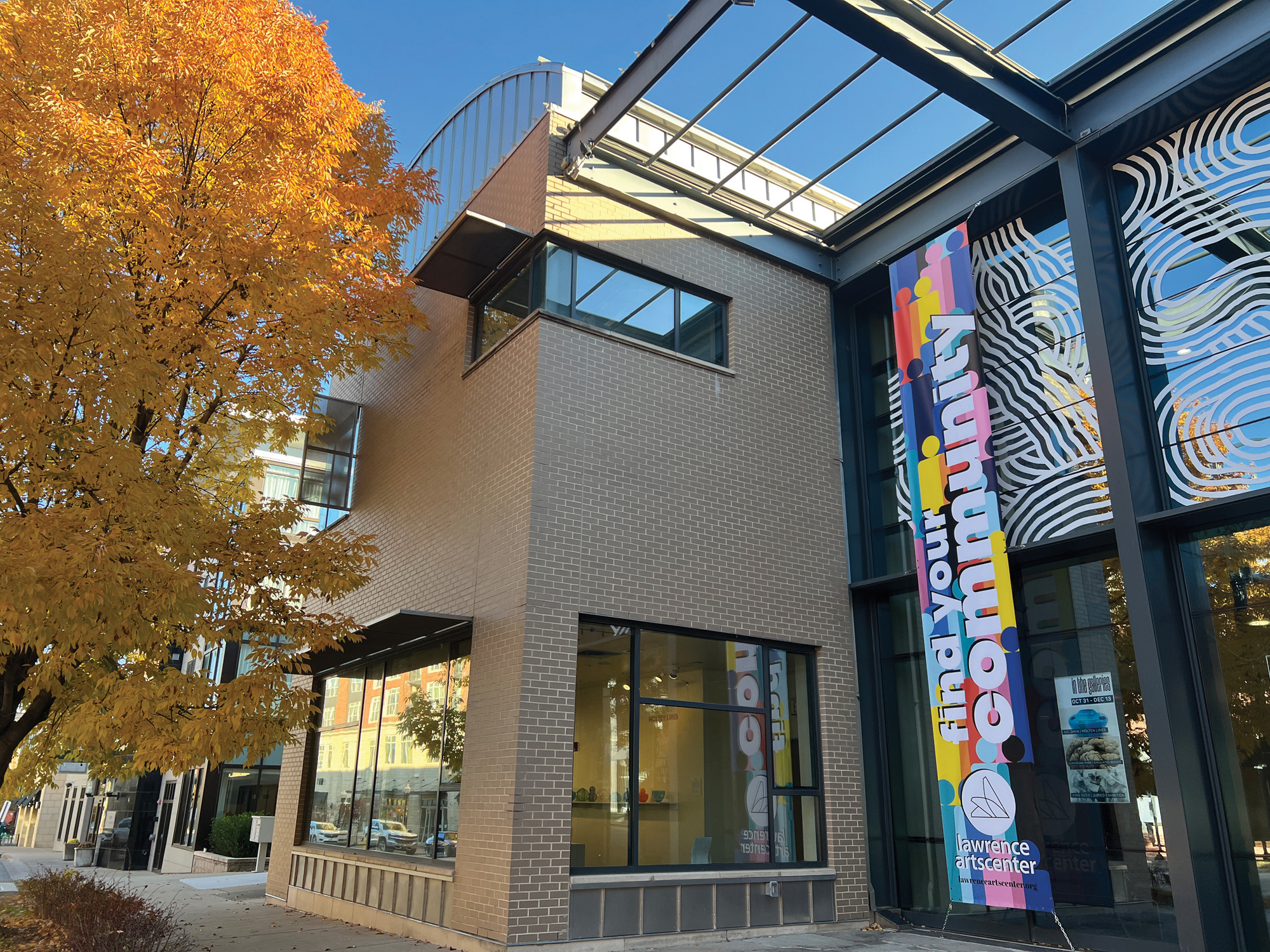
The Lawrence Arts Center photo by Marlo Angell
Funding for the arts has long been debated in school districts and the legislature, but the benefits of young people having access to the arts allow them to find commonalities among one other. Not only that, but participation in the arts has been known to help with stress, mental health and problem-solving skills, while also building community.
Public funding, such as money coming from local municipalities and federal grants, helps to keep free arts accessible and create scholarships to make sure anyone can participate no matter their background.
The Lawrence Arts Center is one of the local groups that receives funding from various grant programs. Because the arts are a revenue generator across the state, continuing to finance these programs is crucial.
LOCAL MATTERS
Our Local Advertisers – Making a Positive Impact
Grant opportunities were at a standstill as the government shutdown stretched into November, the longest-ever lapse in federal appropriations. With the shutdown now over, conversations around federal funding will likely continue.
The Lawrence Arts Center has yet to see changes related to government spending cuts, says Interim Executive Director Ben Ahlvers, as funding for the center comes from earned income like tuition and ticket sales, and other funds from donations, corporations and granting institutions. About 60% of funding comes from earned income, he explains.
“It can always be better, but it … doesn’t seem to be nearly as volatile as the federal situation right now,” he continues. Ahlvers doesn’t believe anyone has a clear picture of what could happen, especially as it relates to federal funding in the future.
It would be rare for the Arts Center to receive money from federal funding in general, he adds. Oftentimes, federal funding is delegated to regional arts organizations that then grant money to places such as the Lawrence Arts Center. Meanwhile, funding from the state has stayed steady in recent years and has provided grant opportunities in a more stable way than would be possible from the federal government right now.
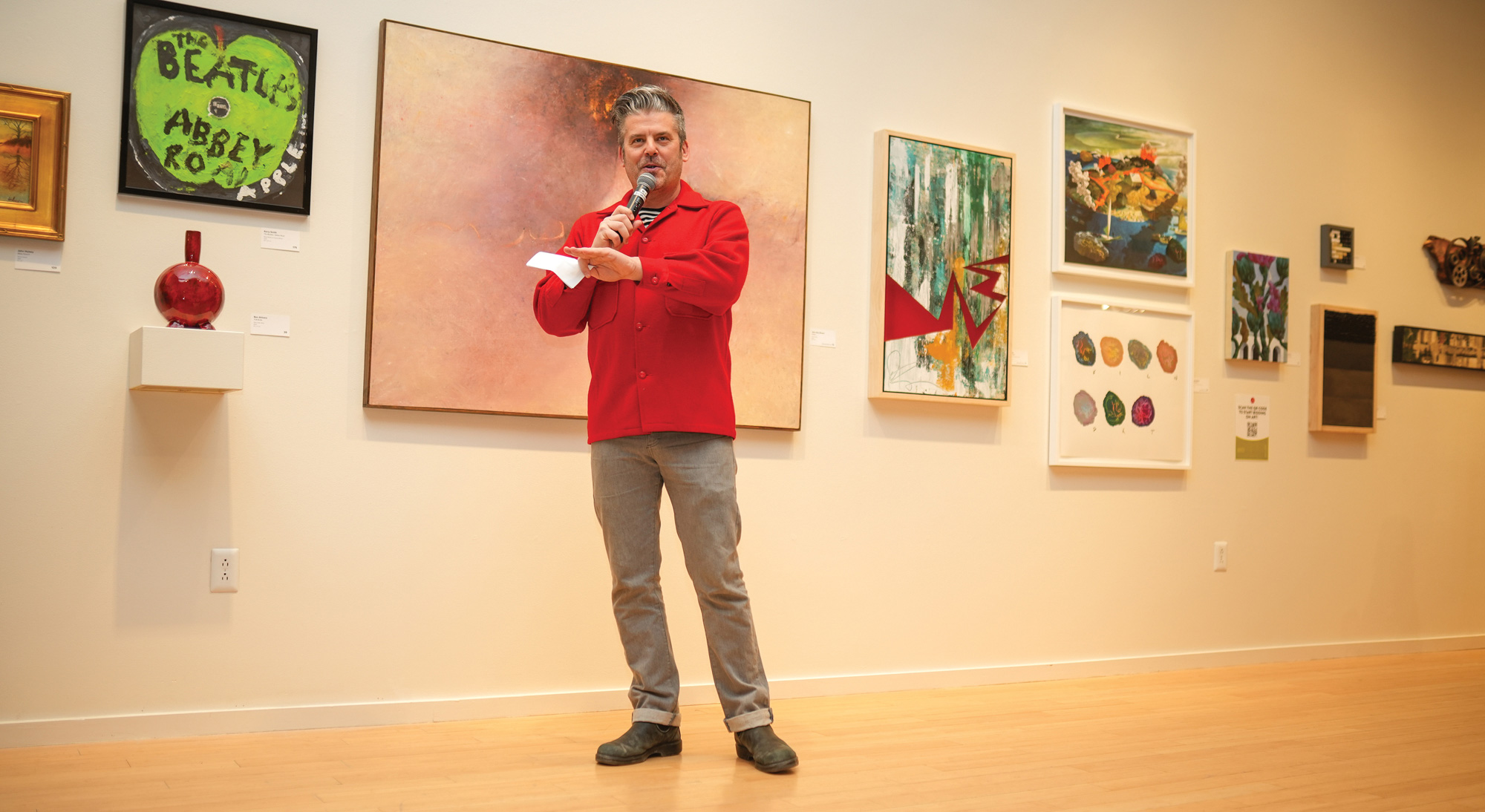
Ben Ahlvers, Interim Executive Director photo by Jeff Burkhead
Funds at Work
Several projects at the center have received grants from Humanities Kansas, an independent nonprofit dedicated to bringing Kansans together to strengthen communities and democracy, funding that has brought in speakers or presenters related to an exhibition or performance, or an art education element, Ahlvers explains. While some of these funding avenues aren’t necessarily funding a direct project, it does serve as supplemental funding.
Marlo Angell, director of film, grants and special projects for the Lawrence Arts Center, says trying to anticipate challenges in funding is a difficult problem to face, adding that grant delegation timelines have been a new problem for the center to work through.
The Lawrence Arts Center also runs on municipal funding, state funding and federal agency National Endowment for the Arts, as well as private donors. Because of the scope of changes in grant qualifications like a change in timeline to submit applications, the Arts Center has had to reorient planning for its annual film festival, she says.
Grants from the Kansas Arts Commission help provide special programs for the center, including bringing artists and exhibits to Lawrence, Angell explains. It also helps with mural programs, youth programs and other educational opportunities.
There have been no changes in the amount of funding the center receives from the city, she adds. Arts and culture are categorized under the Lawrence Parks and Recreation department, and while Lawrence did experience some budget cuts in that area, arts were not impacted, which is something for which they are grateful.
There is always a level of uncertainty, but because state arts commissions are financed by the National Endowment for the Arts, if those cuts were made, it would impact Lawrence arts and culture offerings and would have a domino effect, Angell adds.
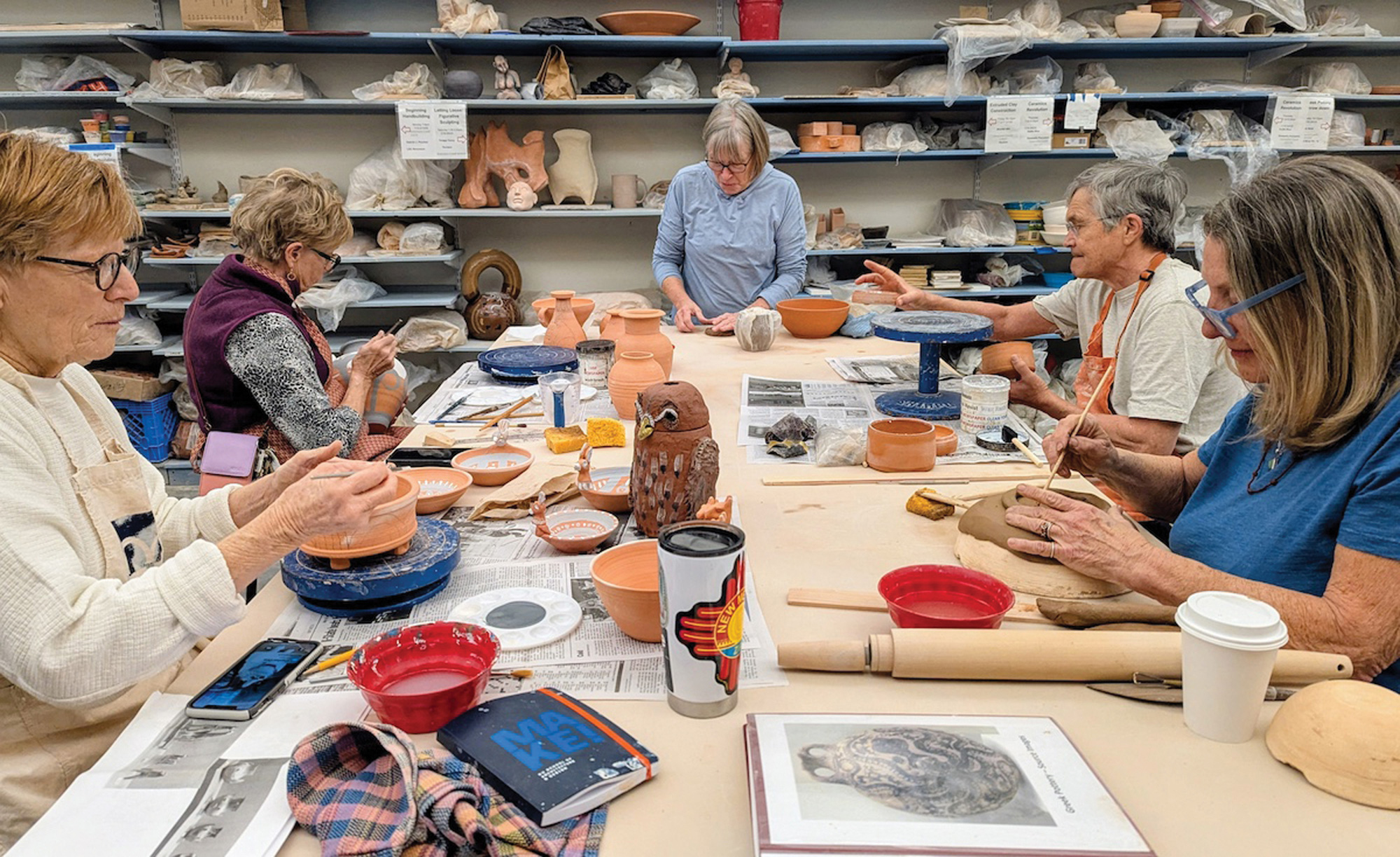
Art classes for all ages at the Lawrence Arts Center
Greek pottery class
Impact on the Community
The Lawrence Arts Center welcomes more than 200,000 visitors annually and employs more than 130 artists teaching more than 400 classes to 10,000 students each year, Angell explains, emphasizing the importance of the arts-focused center in this community.
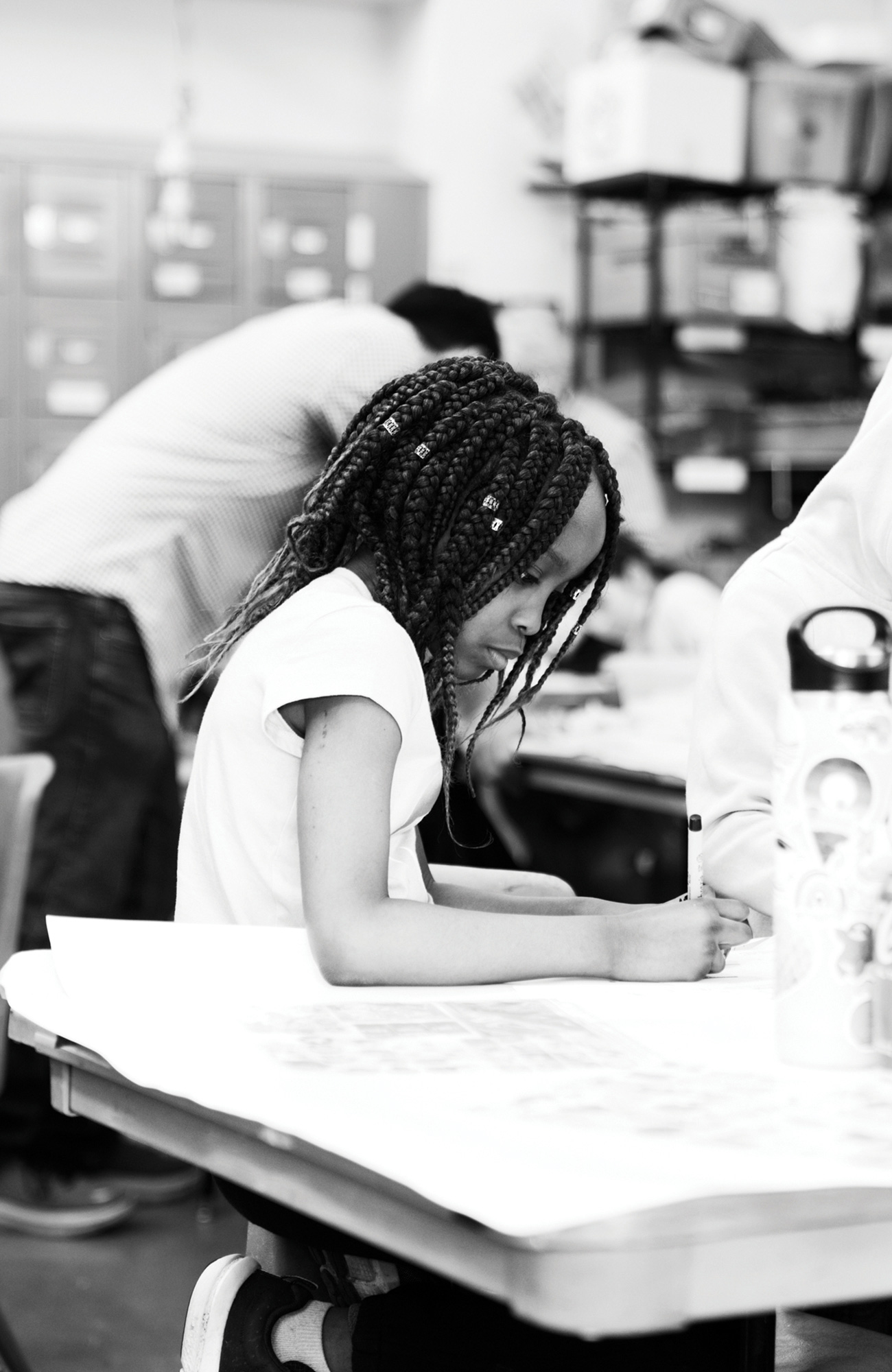
Young art student in drawing class photo by Chris Erazo
It is more than just exposing people to the arts, classes and education—it also impacts mental and physical health, she says. Public funding is needed to set a level playing field for people of all socioeconomic backgrounds.
The Arts Center also serves as a resource for financial aid and arts program scholarships for residents, Angell continues. If the center were to experience more cuts, it would be less able to match the needs of the community’s financial aid and aid residents who experience economic stress or disruptions in their lives.
If there was a decrease in public funding for the Arts Center, there could be widespread ramifications. The center is committed to making the arts accessible to everyone. However, the number of people requesting financial aid goes up each year, she adds. “So, that would be something that could be impacted if our federal and state and city funding got decreased.”
Funding for arts and culture are at the center of what makes Lawrence what it is, Ahlvers explains. If it is removed or decreased, the impact would be notable. Some grant opportunities have been frozen due to unknown funding circumstances.
LOCAL MATTERS
Our Local Advertisers – Making a Positive Impact
“Having grown up in a completely different type of city where there was very little funding toward anything arts and culture, I can tell you that there is a stark difference when it’s there and when it’s not there,” he says. “Lawrence is a very engaged community, and I think, in part, that’s what fuels the wide variety of opportunities here.”
Curtis Young, the director of the Kansas Arts Commission, says although there is nothing in the legislation that forces funding the Arts Commission, luckily lawmakers have done so for years. The amount of funding has been bumped up in the last three years, he adds. The state arts commission also receives funding from the National Endowment for the Arts.
This year’s state government funding for the state arts commission was actually among the highest it has ever been. This year, it also received $926,000 from the National Endowment, which is also higher than usual, he explains. This could prove to work as a kind of security if any federal cuts to local arts programs were to eventually occur.
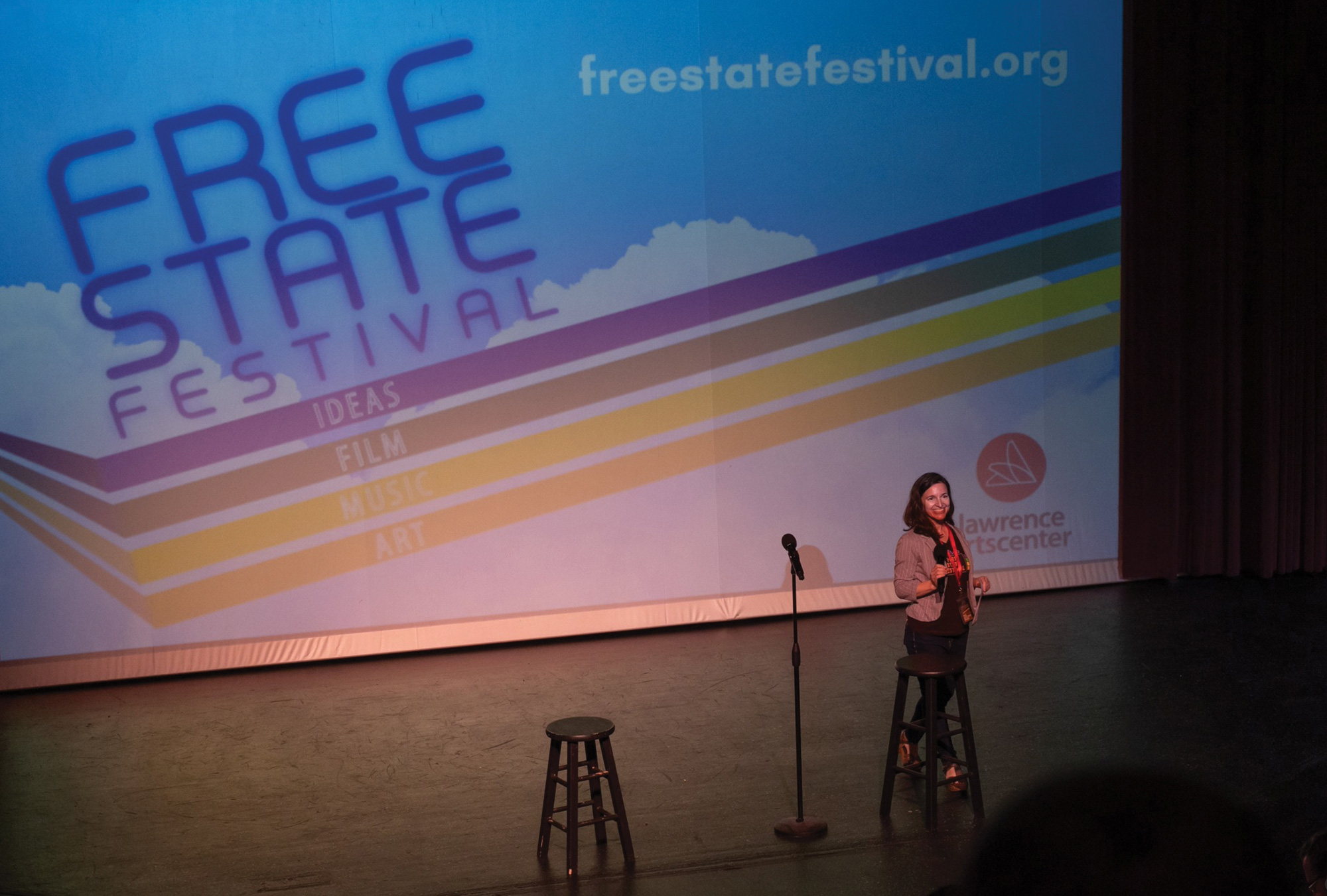
Marlo Angell, Film, Grants & Special Projects and Free State Festival Director
Follow the Money
A lot of the grant funds go toward general support and operating costs for arts programs and special events. The Lawrence Arts Center received a $10,000 grant this year to allow high school students to participate in an entrepreneurial arts program, Young says.
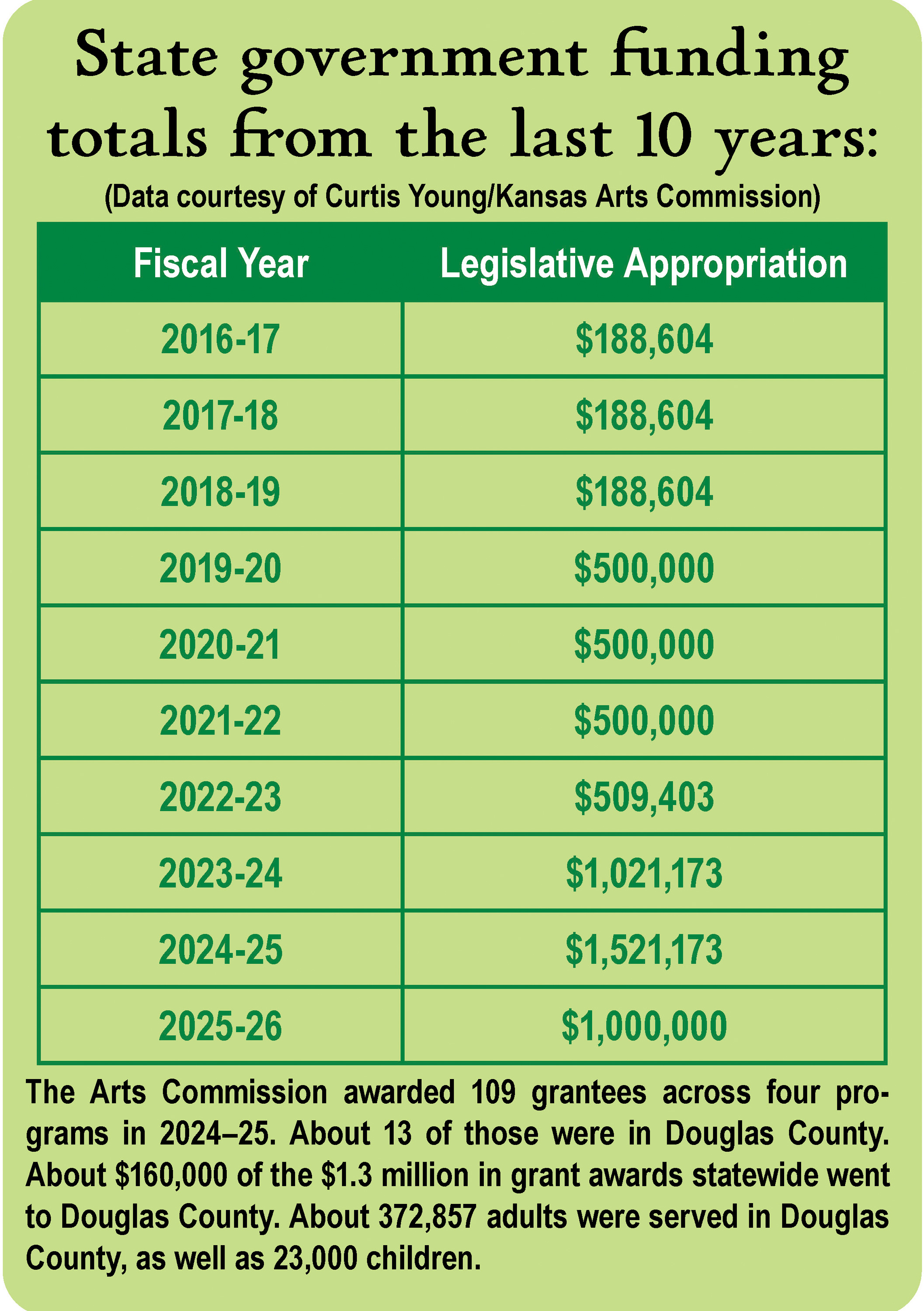
State government funding totals from the last 10 years.
Although funding is secured now, there was a time in the last couple years that there was the potential for completely cutting funding to the Arts Commission. Ultimately, committees did not decide to cut funding, which would have meant no federal funds coming in and the closing of the commission, he says.
“There are arguments to be made that it’s not the state’s place to make that kind of investment, and people make those arguments. In my mind, I think the return on investment we get is too great to be ignored,” Young says.
Erinn Barcomb-Peterson, The University of Kansas (KU) director for news and media relations, says KU will continue to advocate for funding through the government relations team and through organizations like the Association of American Universities and the Association of Public and Land-Grant Universities.
But a loss in funding would impact the number of grants the Kansas Arts Commission is able to support and give out, says Sarah VanLanduyt, chair for the Kansas Arts Network, a 501(c)(3) that serves the state of Kansas and works to strengthen public commitment and advocacy for funding for the arts. She’s also executive director for the Arts Council of Johnson County.
Last year during the budget process, the Kansas Arts Commission budget was reduced by $500,000, but it was able to keep about $1 million in the budget, she explains. “I think what we’re hoping to see in the next session is an ability to restore at least that much and bring the budget back up to $1.5 (million).”
In comparison to Lawrence, VanLanduyt says the Arts Council of Johnson County has seen a decrease in its grant amount awarded for its operating budget. While the community has the potential to make up for those costs, she knows that’s not the case for a lot of other Kansas towns.
The Kansas Arts Network is just over a year old and was founded out of the need for arts professionals across the state to come together and share ideas and resources. Communities from across the state are involved to make sure western and central Kansas are included, she explains.
The Network ties in with the Kansas Arts Commission but is more focused on helping the state, arts community and legislators understand and value the arts bring to the state.
Advocacy looks like everything from inviting legislators to arts events to sharing information about the reach of programs and how much of an economic generator the arts are, VanLanduyt explains. The arts are a significant economic generator for the state and serve as a talking point to get people to understand that it is also a business.