| story by |  |
| photo by | Steven Hertzog |
| OPEN A PDF OF THE ARTICLE |
Critical thinking and problem-solving are essential lessons kids are taught in art classes that help them make important decisions and use good judgment in all aspects of life.
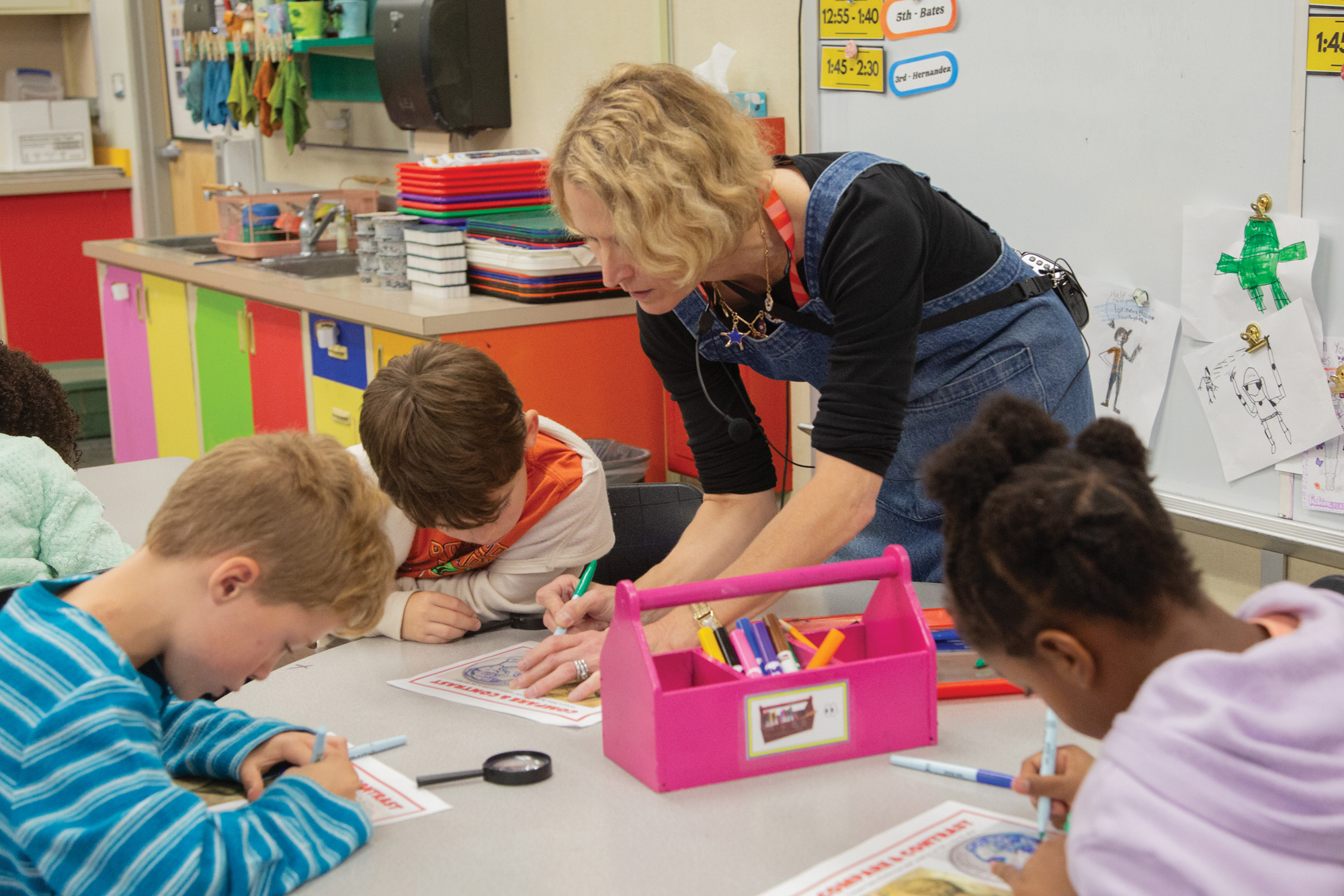
Hannah Hurst, art teacher at Deerfield Elementary
Andria Devlin says she has a stock answer whenever she gets a commonly asked question from one of her students. “If a child asks me, ‘Do you like my work?’ I always ask a question back: ‘Do you like your work?’ says Devlin, director of early childhood education and teacher at the Lawrence Arts Center (LAC) preschool, which serves between 85 and 95 Lawrence-area schoolchildren every school year.
“That’s so important for them to hear, I think,” Devlin continues. “When they answer, ‘I like it,’ I respond with, ‘You should! You worked hard.’ It causes the child to think critically about their work and ask themselves what they like or might not like about it. It allows children to grow their intrinsic motivation skills.”
Art by its nature is a creative endeavor, and any type of creative process requires a substantial amount of critical thinking, whether that manifests itself in more technical choices, such as what color palette works best for a landscape painting or the space and angles to use in a drawing, to more general thought processes like decision-making, problem-solving or teamwork.
When Devlin and her fellow early childhood educators throughout the Lawrence area conduct a class, it’s always about much more than simply brush strokes on a canvas or sculpting shapes out of clay. Teaching young people how to use their minds and make critical decisions and judgments, hopefully, will help them through life far beyond the art studio.
“Teaching the processes of constructing with clay or metal fabrication—my subject matter—is a very small part of what I do as an art educator,” explains Emily Markoulatos, a ceramics and jewelry teacher at Lawrence High School. “Pushing kids to think creatively, expand on their ideas and self-reflect are things that I focus my teaching on much more than the fabricating processes.
“I know that most of my students won’t grow up to be artists,” she continues, “but learning to think critically, get new ideas and practice self-reflection are valuable lessons the arts teach, which are important for every student.”
This teaching philosophy resonates throughout Lawrence’s arts education system, whether it be at local high schools and Lawrence Arts Center, the city’s elementary and middle school programs, or private nonprofit organizations such as Van Go. Critical thinking is a major component of all art curricula.
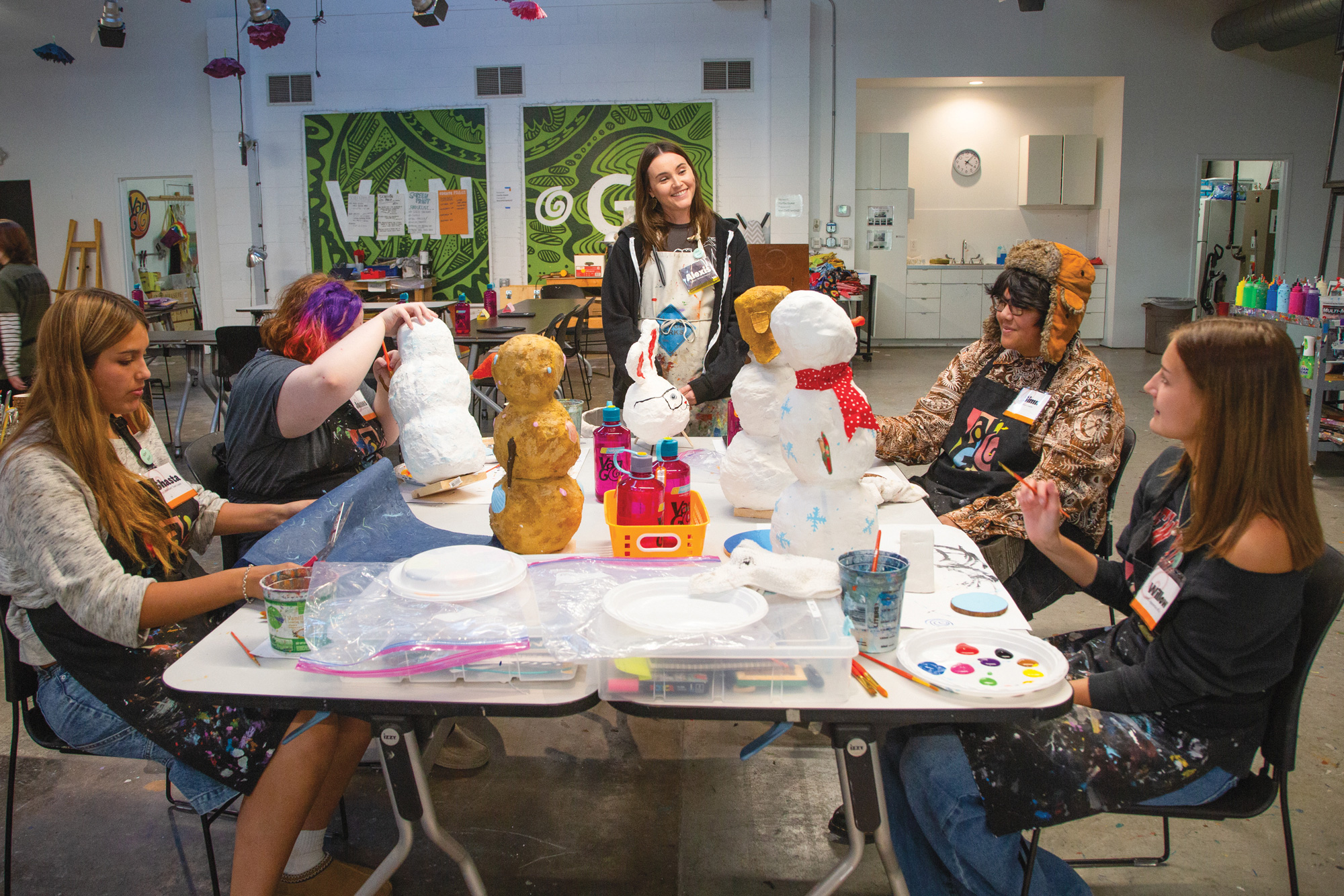
Van Go apprentice artists create and work together
Nurturing a Sense of Wonder
The Lawrence Arts Center has 10 teachers overseeing six preschool classes and one kindergarten class. For half a day two, three or five times per week, children work on open-ended materials that focus on the process of art over the finished product.
“Getting children to think critically is a major responsibility for us,” Devlin says. “We don’t know what adulthood will look like for these children. Teaching children things like cooperation, problem-solving, communication, building social and emotional skills … nurturing a sense of curiosity and wonder.
“It all ties into critical thinking,” she adds.
Devlin says she accomplishes this largely by asking students open-ended questions that typically begin with, “I wonder.”
“That allows children to organically mirror that language,” she says. “How do we help them find the answers they’re looking for themselves? It’s all about trusting children and allowing the time and space to process the world around them.”
LOCAL MATTERS
Our Local Advertisers – Making a Positive Impact
A lot of the time, Devlin says, all that is required during class time is taking a pause and giving a student the time and permission to figure out the solution to a challenge themselves before asking for help. Once the student crosses that threshold and comes to a solution, there is then acknowledgment that his or her efforts were noticed by the teacher that he or she accomplished a difficult task.
“A lot of children don’t get that chance,” she continues. “They follow the adult or a peer. We want to empower children to be decision-makers.”
Another important aspect of teaching critical thinking, Devlin says, involves consideration of others—experiences, feelings, thoughts, use of materials. Many young preschoolers are egocentric, so designing lessons and team projects that involve patience and consideration of classmates’ work and efforts is especially important.
Holding a preschool and kindergarten in a community arts center has some perks, she says, such as access to a stable of many of the talented artists who live here. Every year before Valentine’s Day, Devlin says a printmaker brings a printing press into the classroom to make Valentine’s cards. Ceramists visit classes to help students work with clay. Dancers and musicians also come in, and Devlin says at least once a week, children take advantage of the LAC’s dance studios to get their bodies moving.
She also stresses that Lawrence Arts Center does all it can to ensure its preschool and kindergarten programs are available to all interested. The center has a robust financial-aid program financed through the City of Lawrence and private donors. Currently, 12 percent of students access aid.
“Art is for everyone,” Devlin says. “We’re a big believer in that here.”
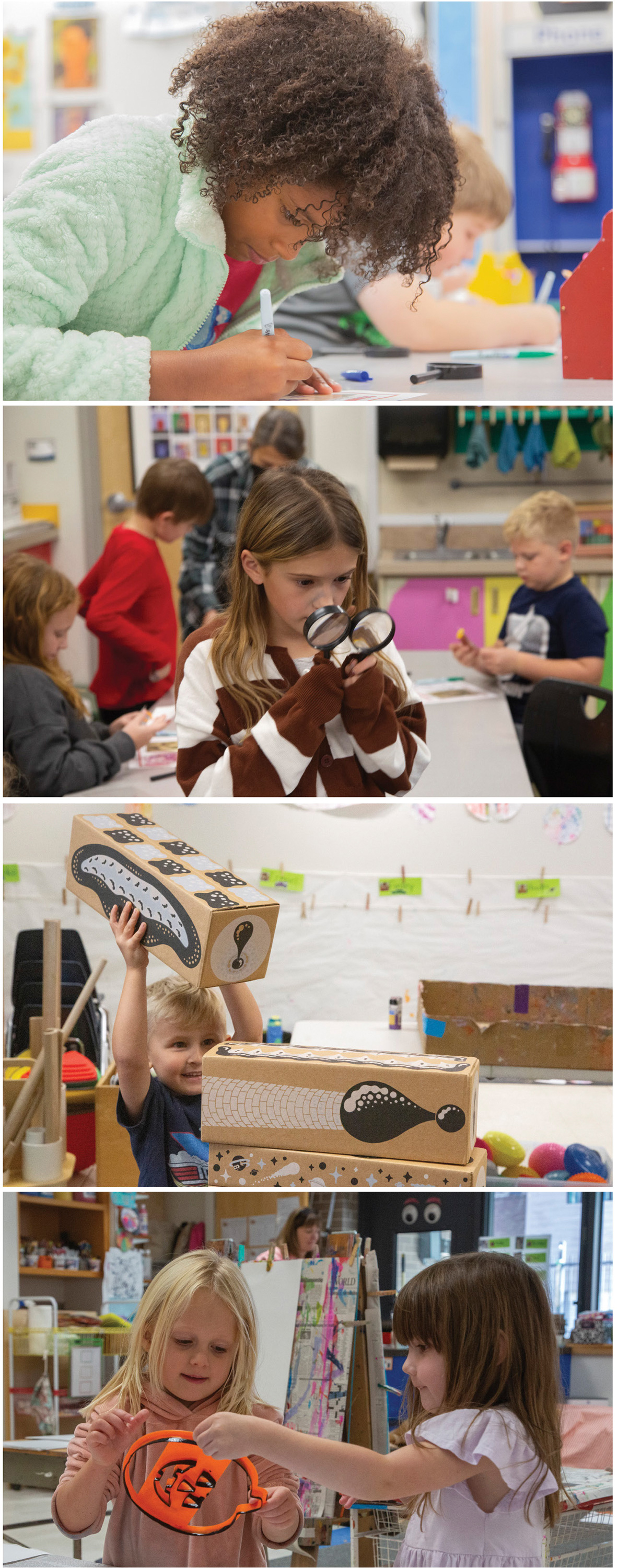
top to bottom: Deerfield students focus on their assignment; Lawrence Art Center students simultaneously play and create together
Drawing Them In
Van Go is a nationally recognized arts-based employment program for teens and young adults that’s been a staple of the Lawrence arts community for more than 25 years. Using art as a vehicle for self-expression, self-confidence and hope for the future, the nonprofit organization employs participants to create artwork while receiving mentorship and guidance, preparing them for future employment and careers.
Art is what draws young people into the program, but once in, they realize it’s much more. Participants are encouraged to figure out what they want to do with their lives and what it will take to get there. Whether that’s by pursuing higher education, earning through a certificate program or finding an entry-level job in the industry they want to pursue, Van Go is there to guide them.
Van Go has two programs serving two specific age groups. Jobs in the Arts Makes Sense (JAMS) program are for 14- to 18-year-olds and teach important job skills employers value and life skills needed for self-sufficiency. The Arts Train (TAT) program is a transitional employment program for young adults ages 18 to 24 that provides paid employment, employability skills training and comprehensive services aimed at addressing and overcoming barriers, setting attainable goals and preparing for successful employment.
Critical thinking is paramount for all programs.
“With JAMS, the goal is to teach employment skills,” says Lori McSorley, executive director at Van Go. “An artist has to brainstorm, plan and adjust when things don’t go according to plan. Those are critical-thinking skills that are useful in all aspects of life.
“TAT is more in depth in terms of learning life skills, working on goal-setting, employment skills,” she continues. “How to fill out (a job) application, learning soft skills that help in an interview. We also have Go Healthy, which is education on all things health … not only in terms of healthy nutrition and personal habits, but healthy relationships, healthy financial habits and more.
“We’re preparing participants for life,” McSorley adds. “They don’t have to have any art skills at all. But key critical-thinking skills are all what’s being taught at Van Go.”
LOCAL MATTERS
Our Local Advertisers – Making a Positive Impact
She points to an art-related example of when critical and creative problem-solving became front and center on a recent Van Go project. A local engineering firm enlisted Van Go artists to create a mural for one side of the building. The wall was inaccessible to the artists, however, so they painted panels at Van Go and then transferred them onto the wall of the building.
“A mural isn’t just putting paint on a wall,” McSorley says. “There are presentation skills, planning skills, developing creative solutions, using multiple perspectives. This was a great example of problem-solving.”
Another story McSorley loves to tell is that of a Van Go participant who, through the TAT program, figured out he wanted to become a farmer. Through TAT’s employment program, the participant went to work as an apprentice for a local farmer, and when that farmer decided to retire, he left his farm to the participant.
“It’s an interesting mix of art and employment,” she explains. “Our goal is to remove as many barriers to employment as we can.”
Van Go has enjoyed great success in that regard over the years. In 2024, it served 105 teens and young adults, and provided 120 work opportunities. Seventy-six youth received compensation totaling $160,083 in wages and stipends.
In JAMS, attendance, punctuality, completion and evaluation improvement rates all were in the mid- to upper-90 percentile. For TAT, attendance and punctuality were in the 90s, with a completion rate of 85 percent.
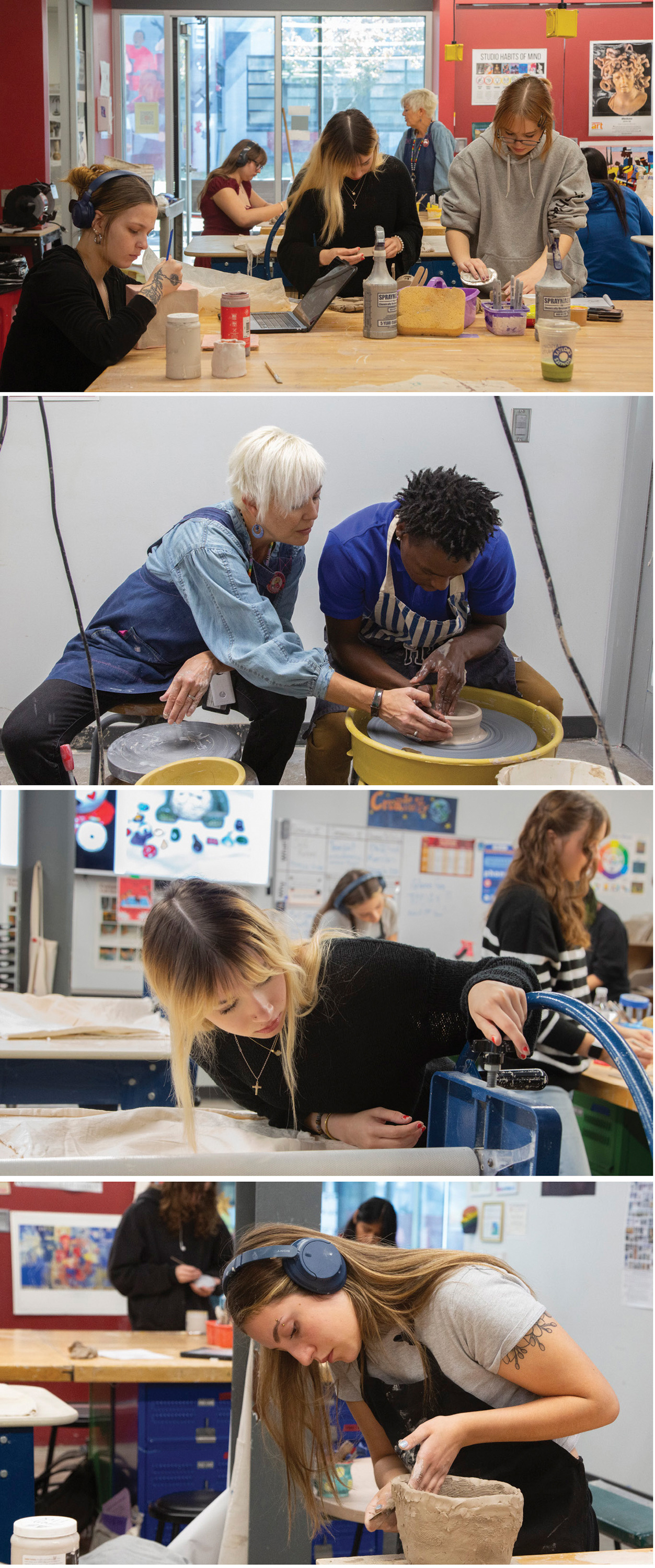
Emily Markoulatos, ceramics and jewelry teacher at Lawrence High, with her ceramics class
Getting Creative at Being Creative
Hannah Hurst says she’s incorporated critical thinking into just about every lesson she’s taught her students in the last 12 years as an art teacher at Deerfield Elementary School. A quick example she gives is, while teaching the ancient Japanese art of origami, she gives students two minutes to form the shape of a cat out of a piece of paper using just three folds.
“I think it’s an important piece (of the curriculum) for kids to use critical thinking,” Hurst says. “Another thing we do quite a bit is team-build. We’ll break a class into groups. And if one student in the group completes a project quickly, then they have to take the time to help someone else at the table.”
She says she’s always enthusiastic about bringing local artists into her classroom to share their knowledge, wisdom and experience with students. In the past, she’s had Stephen Johnson do illustrations for children’s collage activities, and Kristin Morland create images out of sequins.
“Kids love having people from the community come in,” Hurst explains. “It’s fun for them to see local working artists and how they create their art.”
She says all third graders at Deerfield take a field trip around Lawrence to see and learn up close the history and unique local architecture of the town’s homes and buildings. Once they return, she leads her classes in playing a card game called “Unmistakably Lawrence” that introduces students to local architecture.
“They are literally overjoyed when they see me after the field trip … exclaiming about all the buildings and houses they got to see,” Hurst says. “This real-world experience is powerful.”
Deerfield being a public elementary school allows for a diverse student body, with children of all origins and socioeconomic groups represented.
LOCAL MATTERS
Our Local Advertisers – Making a Positive Impact
“We take all fourth and fifth graders to the Spencer Museum of Art,” Hurst says. “That gives kids of all strata an opportunity to go to an art museum and research shows that kids who go to art museums will go back as adults.”
At the end of the day, while teaching principles might be art specific, the goal, she says, is to make her students into well-rounded human beings.
Markoulatos, in her fourth year teaching art at Lawrence High School after teaching at Billy Mills Middle School and Ottawa High School, says project-based learning, which is the essence of art education, forces students to constantly problem-solve and make critical decisions.
“From the brainstorming to design to fabricating, students evaluate, edit and reassess their artwork as they work through the art-making process,” she says.
Markoulatos also loves to work with artists in the community and recently had a guest artist, Kim Brook, demonstrate to students how to throw lidded forms on a ceramics wheel for her Ceramics II class. In the spring, her advanced ceramics students collaborate with the ceramic artist-in-residence at the Lawrence Arts Center.
“The diversity of the student population is one of the big reasons I love working at Lawrence High School,” she says. “That and the support of art education from our staff and administrators. It is really great and not something you find at every school.”