| story by |  |
| photos provided by | Venues |
| OPEN A PDF OF THE ARTICLE |
Live, community-oriented events bring people out of the woodworks and put money into the hands of our local businesses and artists.
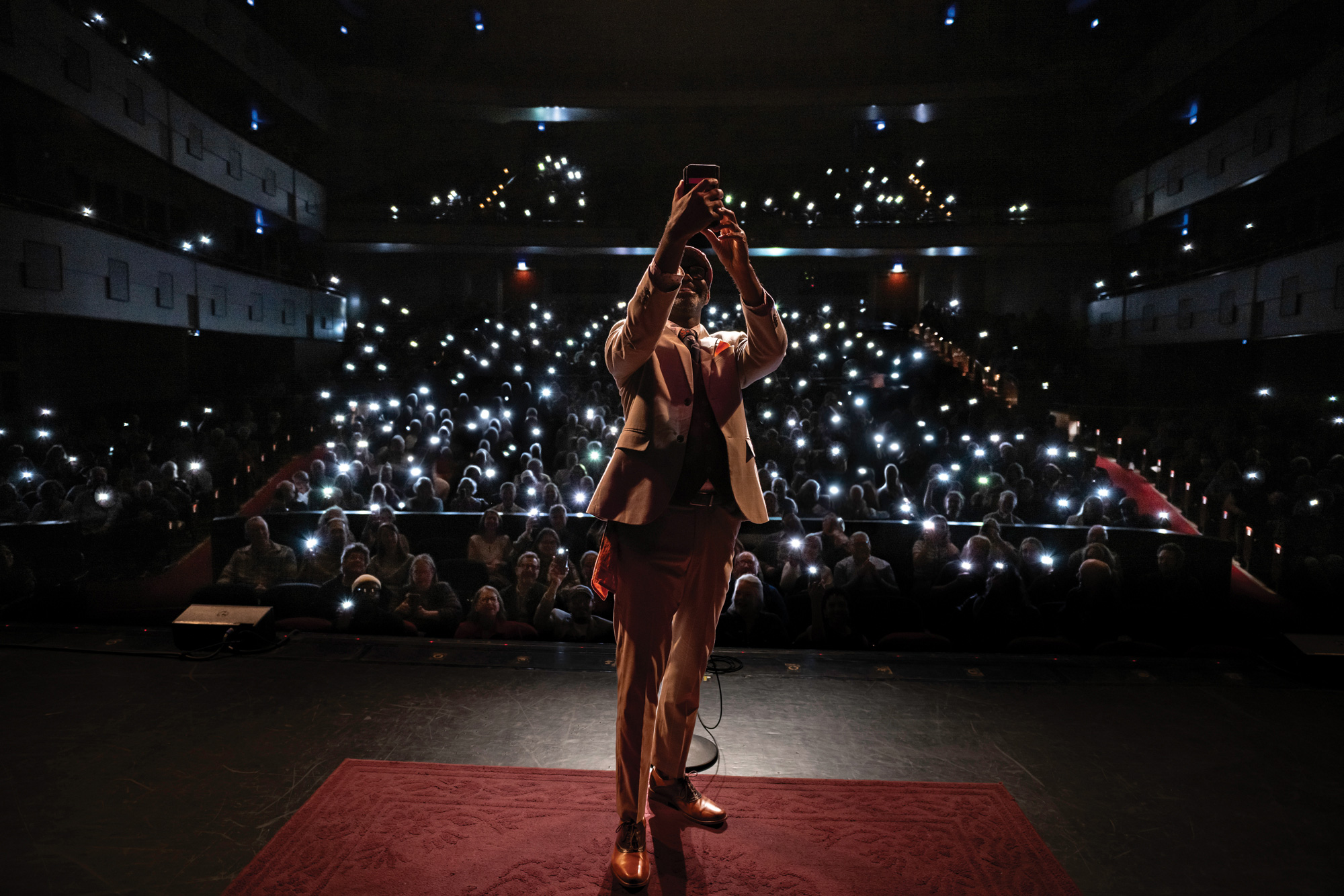
The Moth-The Lied Center-Photo by John Clayton
Thanks to Lawrence’s location on Interstate 70 and the presence of The University of Kansas and its student population, this city has live entertainment options far outside what most other towns of approximately 100,000 residents could hope for. In any given month, it’s possible to see national or international music acts, a Broadway musical, orchestral works and touring comedians, to say nothing of the robust music and arts scene of local performers.
According to the 2024 Lawrence Music Census, “a community-led initiative to gain a better understanding of the current music needs of the Lawrence, Kansas, community,” Lawrence is a live music city with an astonishing 6,582 live events annually. These events generate $13 million in income for respondents who categorized themselves in the music ecosystem categories of music creatives, industry or venue/presenter.
Creating Jobs
Speaking with those who have a lengthy history in Lawrence’s live entertainment scene, it’s apparent the economic impact of local live music goes beyond tickets sold and drinks purchased from the bar.
Dean Edington, events manager at Liberty Hall, points to the fact the Massachusetts Street venue normally has around five or six regular employees engaged in tasks such as selling tickets, working the concessions stand and screening movies. However, when a concert or other live event takes place, that staff could swell to upwards of 40 people. That could include 15 to 20 people working directly for Liberty Hall, including Edington, as well as those in the box office, some checking IDs and taking tickets, bartenders and those working sound.
LOCAL MATTERS
Our Local Advertisers – Making a Positive Impact
“Then you start adding in four to eight stagehands from the promoter and the promoter rep, and the runner and the dozen extra security,” he adds. “Then it’s suddenly, ‘Oh wow. There’s 40 people emplyed at this thing.’ ”
From that viewpoint, Edington continues, the local live music business does a lot economically, including bolstering income and helping bring financial stability to those who do gig work.
“And it also brings a load of tax dollars into the city,” the events manager notes. “If there’s a thousand people in the Hall, they’re driving here. They’re buying gas. They’re probably paying to park. They’re eating downtown. They’re probably gonna go shop in some random stores if they’re coming in from out of town.”
One show results in a series of financial interactions that generate revenue for the whole city, and it doesn’t go unnoticed by those businesses adjacent to Liberty Hall, Edington explains. Every show results in a call from their neighbors at Free State Brewing Co. asking what the Hall’s schedule looks like—from artist arrival times to how many attendees they’re expecting.
“I get those calls from businesses around us so they can prepare for an onslaught before our onslaught,” he jokes.
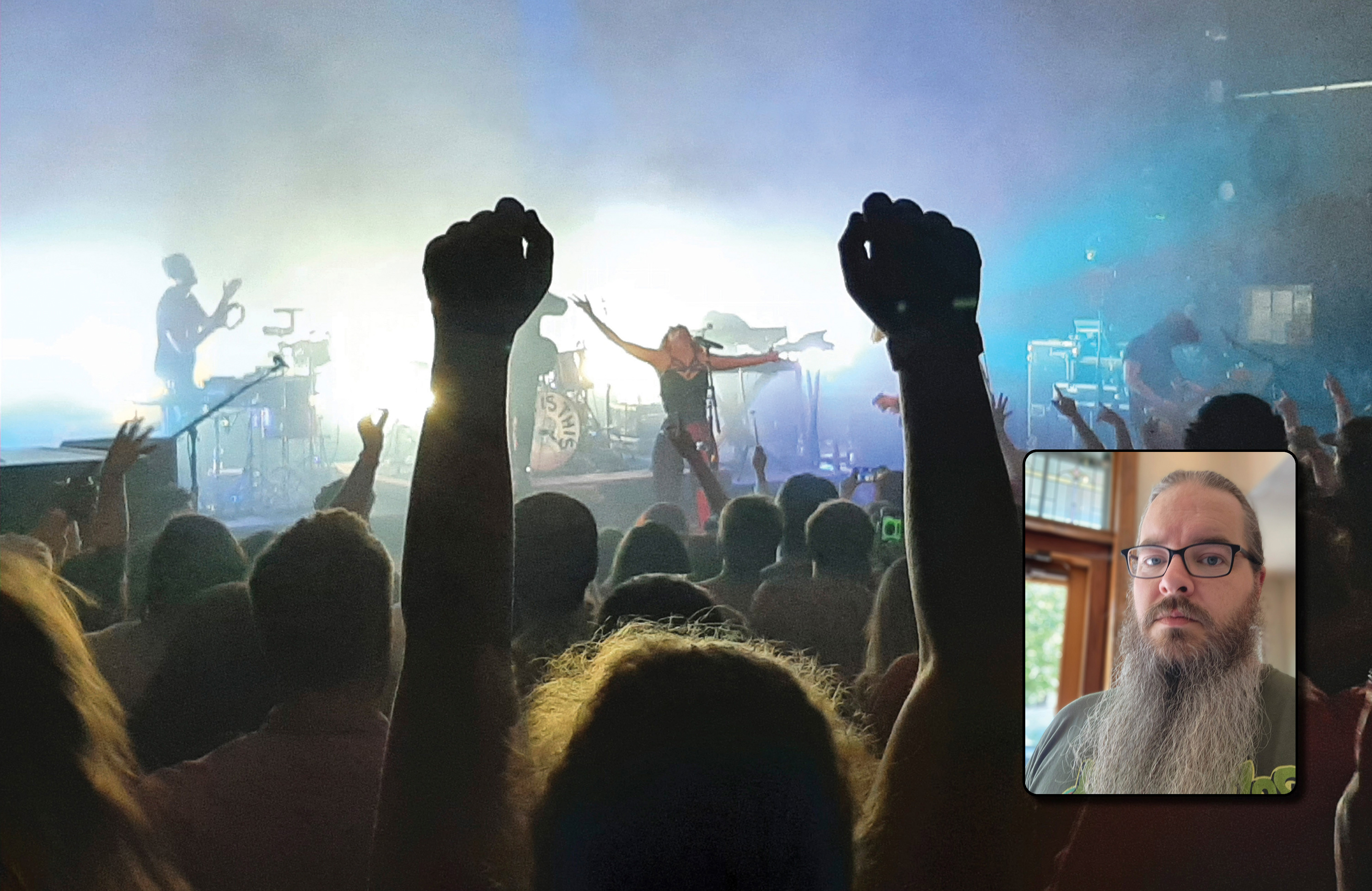
Liberty Hall-the band Grouplove by Nick Spacek
Bringing the Crowds
As to what draws people in for shows, it can vary. Fally Afani, editor for I Heart Local Music and communications manager for the KU School of Music, wrote her master’s thesis on using data and online methods to promote music and its effects. She’s quick to note that this was all pre-COVID, but at the time, the data showed the best way to pull people into town for shows was with something that was free, pointing to the Live on Mass shows presented in the 1100 block of Massachusetts Street in front of the Granada as being particularly robust draws.
However, Afani continues, what was true then that is also true now is the things that are more community-oriented are the best draws.
“Even with Pride,” she notes of the annual June event, “which is not technically a music event, but it’s really the same setup. You have an event, you have performers, you have entertainers, you have an audience that you wanna market to, you have sponsors. Pride has always been free, and we’ve been very adamant about that.”
Part of the reason for keeping Pride—as well as I Heart Local Music’s annual cover shows—free is that free and community-based events do really well beyond just the performance itself.
“How do you support a venue keeping the event free?” Afani asks. “Well, they make tips at the bar. The band makes good money with merch and donations. I had a drag queen on a show once, and someone loved the first number so much, they ran up and tipped her a hundred dollar bill. So there’s ways to boost that economic impact beyond just the show.”
And there’s not one particular genre these days that pulls people in, as Afani has learned over the course of her longtime work as a music journalist and running I Heart Local Music.
“Before the shutdown, it was metal,” she recalls. “Everyone showed up for metal concerts. Everybody showed up for country artists. But now, it’s no specific genre, you know?”
The one thing Afani does point out as having remained consistent is roots music.
“Bluegrass and folk and Americana in this community have always had massive support,” she explains. “You could actually be a full-time musician in that realm. Those fans, they show up, they buy the merch, they subscribe to your Patreon, they’re donating to whatever you asked them to do. Those fans are steady no matter what.”
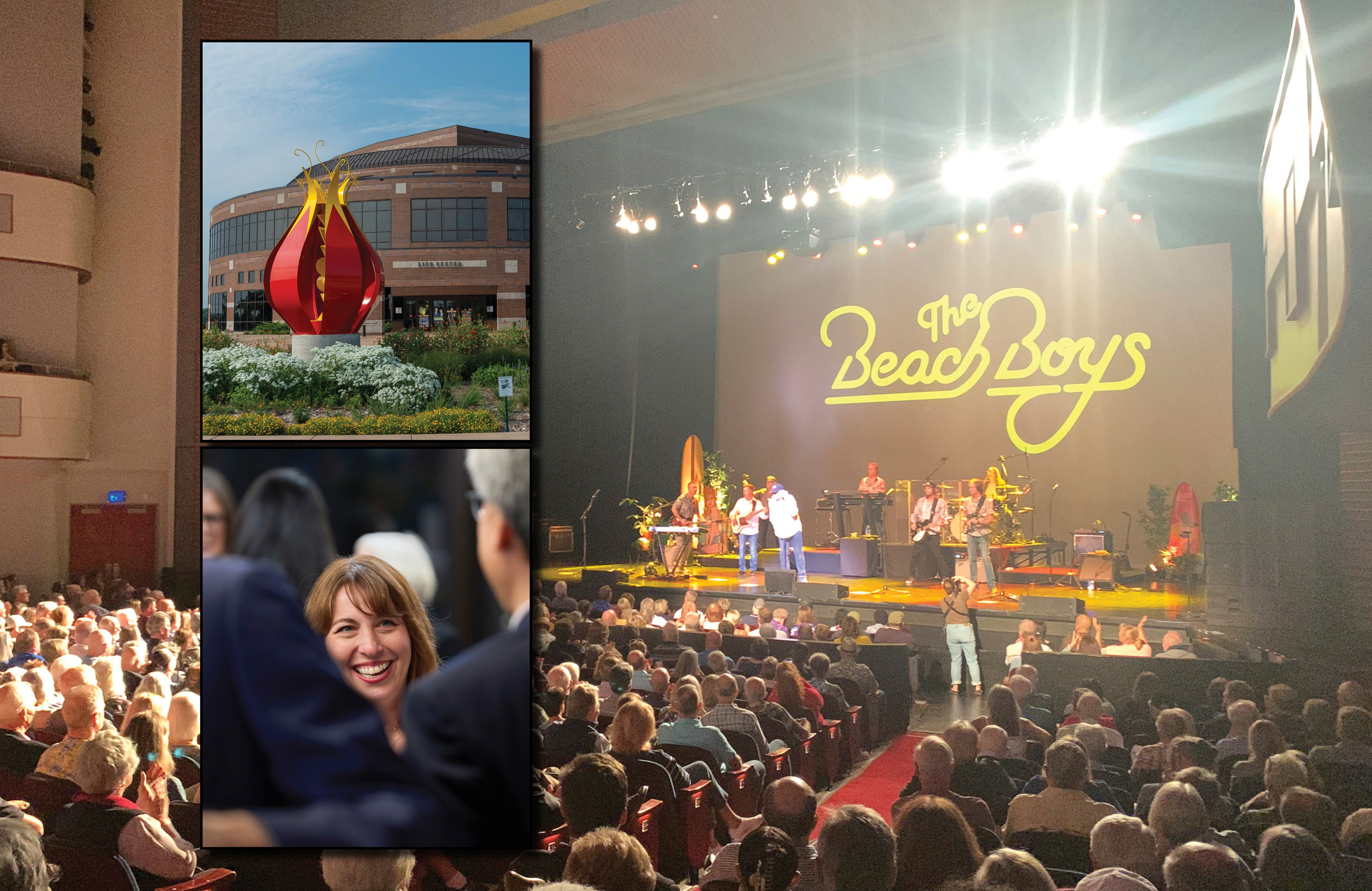
The Beach Boys at The Lied Center, Courtesy The Lied Center; Insets: The Lied Center by John Clayton, Kate Lorenz by Carter Gaskins
Helping Hands
Also important to bringing dollars into the community are those who volunteer in Lawrence because of their love of live performance and the arts. Nowhere is that more visible than at the Lied Center of Kansas. Kate Lorenz, senior director of events and audience services at the Lied Center, says volunteers are a huge part of the organization.
“We have a group of about 120 registered with us, probably about 70 of whom work with us all the time,” Lorenz explains. “Really, really regularly, many events per year—sometimes many events per week—functionally, they really are a lot of times the only people that someone may interact with on the night of the show.”
If a person has bought a ticket in advance to an event at the Lied, a volunteer will scan that ticket, give them a program and help them find their seat, she explains.
“A lot of times on the actual show days, the volunteers are the most significant face at the Lied Center a lot of people may directly interact with,” Lorenz says, explaining that because Lied volunteers do a lot of the event-management work, a lot of effort is put in to not only training people, getting to really know them and where they like to work, and making sure they can work in multiple areas, but also making sure the volunteers know just how much the Lied appreciates them.
“We do an event in the fall—a smaller social—and then we do a big dinner for our volunteers in the spring,” Lorenz points out, noting that a lot of the Lied’s volunteers also volunteer at LMH Health, Theatre Lawrence or other places in the community, serving both as ambassadors for people to come to shows at the Lied and also helping to recruit more volunteers.
“We want to have trained ushers who know what they’re doing, but we always want to have new people who are excited,” she adds, noting that new volunteers help bring fresh energy.
Lorenz also points out that many of the Lied volunteers are also members of Friends of the Lied, an organization whose donors help make sure the Center “ensure(s) world-class performing arts are available in the KU and Lawrence communities.”
It’s not just those with tickets who benefit from the Lied Center’s volunteers. Between roughly 60 students working as tech staff, another 20 in the front of house and ticket operations, and various interns, the Lied Center has 80 to 100 college students working with them a year.
LOCAL MATTERS
Our Local Advertisers – Making a Positive Impact
“Between the ushers, who are, for the most part, above retirement age, and then most of our paid staff are students, it’s this wonderful intergenerational work environment, which I actually think is fairly rare,” says Lorenz, explaining she feels the students grow so much more because they’re not surrounded by only peers. “And it’s very important and very special to have in terms of being able to support anyone who comes in, of any age, any need.”
With Liberty Hall being for-profit and the Lied Center being nonprofit and attached to The University of Kansas, both have similarities and differences in how they operate. “The community building aspect is as much a metric as the ticket sales, though finances always enable you to do what you want to do,” Lorenz says.
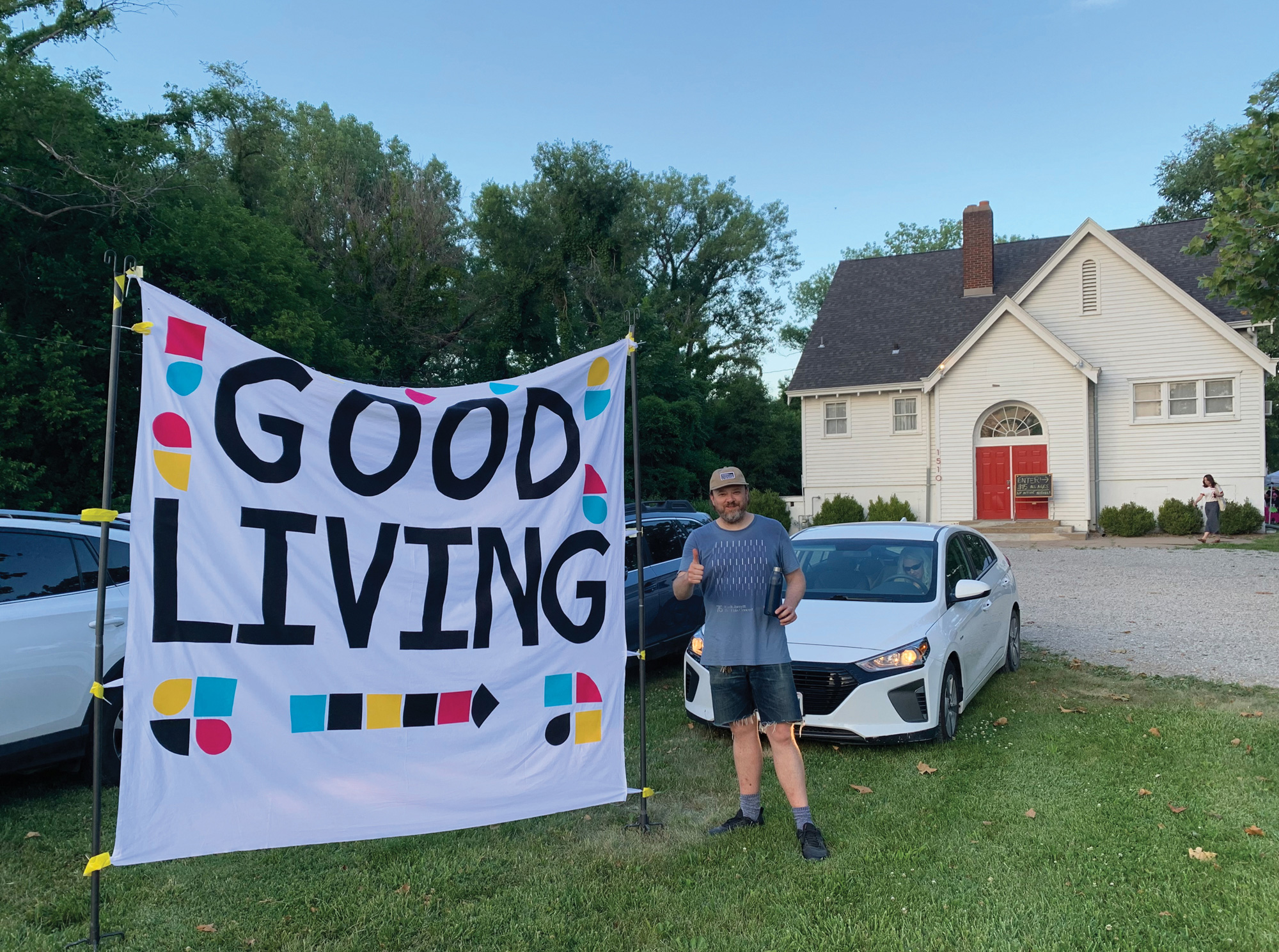
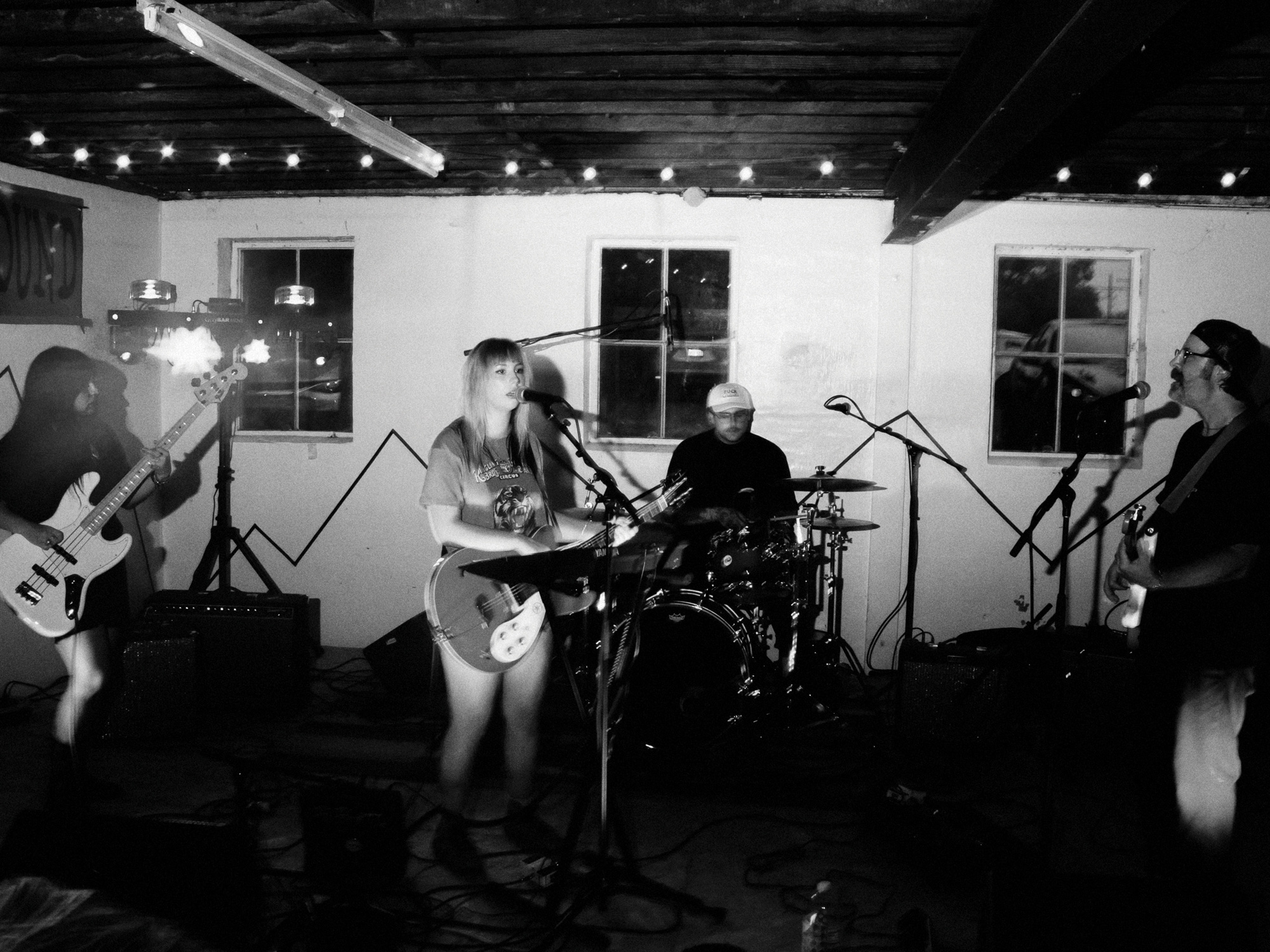 Kelly Cororan (owner of Love Garden Sounds) helps park cars at Sweeping Promises’ album release show at the White Schoolhouse. Photo by Paul DeGeorge for LAAND; Lawrence Band Flora From Kansas performs at The White School House
Intentional Work
At the opposite end of the spectrum stands LAAND, the Lawrence All-Ages Noise Destination, a nonprofit 501(c)(3) “cooperatively-run arts organization” which aims “to create an open, supportive and culturally vibrant space to foster a DIT (do-it-together) community through music concerts, experiential learning and volunteer opportunities for all ages.”
As a nonprofit run entirely by volunteers, the way LAAND operates can be a little different, board member Paul DeGeorge says.
“We can lose money on every show, and we do,” DeGeorge states. “That’s the sum total of it. We get enough public funding that we can comfortably lose money on every show.”
“Because we’re are a nonprofit, we can apply, and we have applied and received grants, so that’s how it’s possible to do what we do,” explains Jennifer Roth, fellow board member and LAAND treasurer. However, both she and DeGeorge agree because they’re not aiming to book commercially, it affords the group a chance to book artists they’re interested in booking, even when they know that that show might not earn out.
“We can book artists that we think are important, that we want to see staged in Lawrence,” DeGeorge continues. “Even though they might not be in a position in their career, necessarily, where they can play at one of these larger venues, in particular, we can be more adventurous for sure.”
Think of LAAND less as a promoter and more as a community organization. At the heart of it, the organization is doing what Edington, Afani and Lorenz all do but at a more direct, grassroots level.
“We think of ourselves as essentially community organizers,” DeGeorge explains. “We’re just people in the community organizing events, and we want them to be good community events. And they are always manifestly better whenever there’s more people in the community involved.”
The more vendors LAAND has at a show, the more exciting the atmosphere, he continues. Whether it’s people selling cookies, drinks or tacos, that brings up the positive vibes, and everybody feels good at the end of the night.
“Like, ‘Wow, we did something fun,’ ” DeGeorge adds. “Every show we put on is full of intentionality.”
“I also think that we’re people that put on experiences that are guided by a certain set of values or goals …” Roth says. “From the beginning, I’ve thought of this as a joyful sort of activism. If I have to think about the economics, we’re thinking, ‘How do we get more money in the hands of artists? How do we get more money in the hands of these local partners that we have?’ ”
Afani wraps up by alluding to the feeling one gets watching the early 2,000’s comedy drama series “Gilmore Girls.”
“You don’t wanna live in a New York City,” she says. “Everybody wants a Stars Hollow. They want a kooky, cute, small town that has all these fun events, so if you’re gonna talk about an economic impact, it has to be accessible.”