| story by | |
| photos by | Steven Hertzog |
| OPEN A PDF OF THE ARTICLE |
Douglas County’s 4-H club introduces young farmers not only to the value of hard work but also to the world of business.
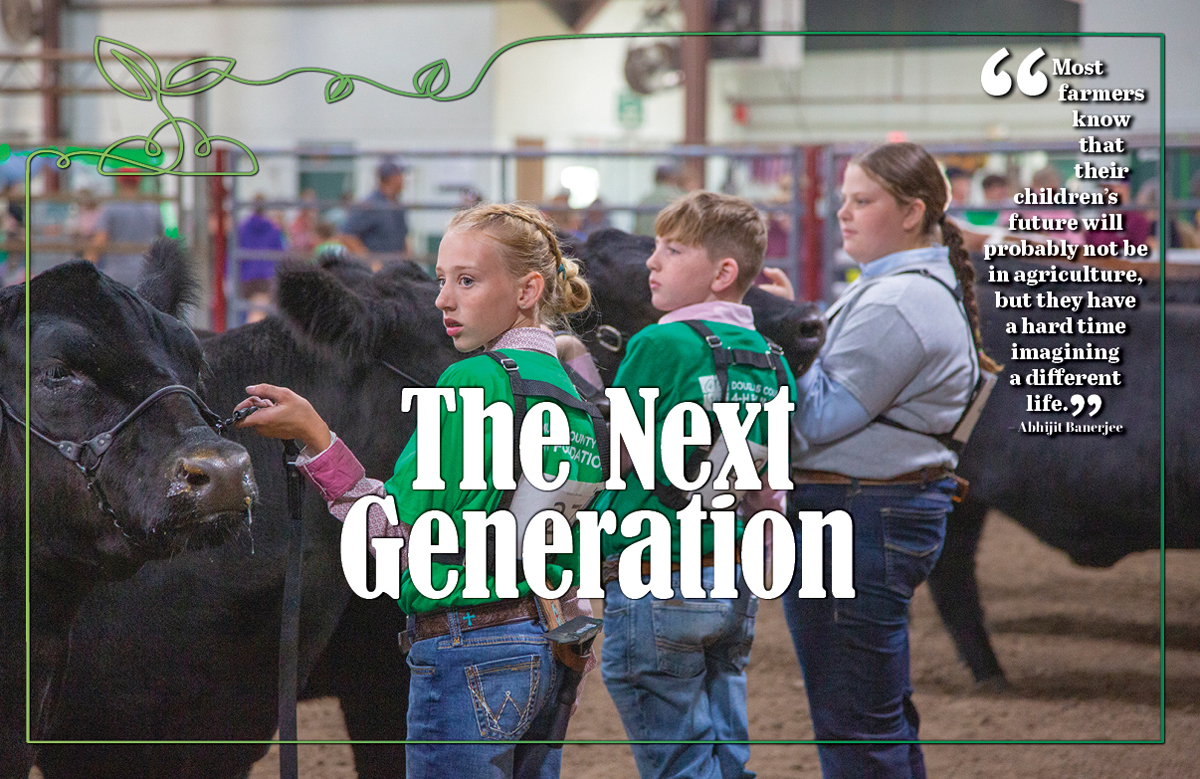
Lone Star 4-H – Club, Pen of 3 Competition – 1st Place
The land that makes up Douglas County, Kansas, has a rich history of supporting crop farms and livestock stretching back centuries before European settlers began planting their own roots in the area. Today, many families currently farming in and around the county work the same land their ancestors cultivated since first arriving in the Kansas territory.
 Most farmers know that their children’s future will probably not be in agriculture, but they have a hard time imagining a different life.
– Abhijit Banerjee
For a special group of future farmers, this deeply rooted talent and affinity for growing the vegetation and animals that nourish hundreds upon hundreds of people each year germinates at an early age and lasts a lifetime. These young entrepreneurs are feeding, cleaning and caring for livestock up to 10 times their own size as they prepare for fairs, shows, livestock auctions and other buyers in the market for quality, locally raised animals.
Raising livestock isn’t just a hobby for these youth. It’s a serious introduction to the world of business, complete with startup costs, long-term investment decisions, scientific discoveries and invaluable life lessons.
Douglas County’s 4-H club has provided support and mentorship to young agricultural entrepreneurs for generations as they hone their skills and find their passions within the business of agriculture.
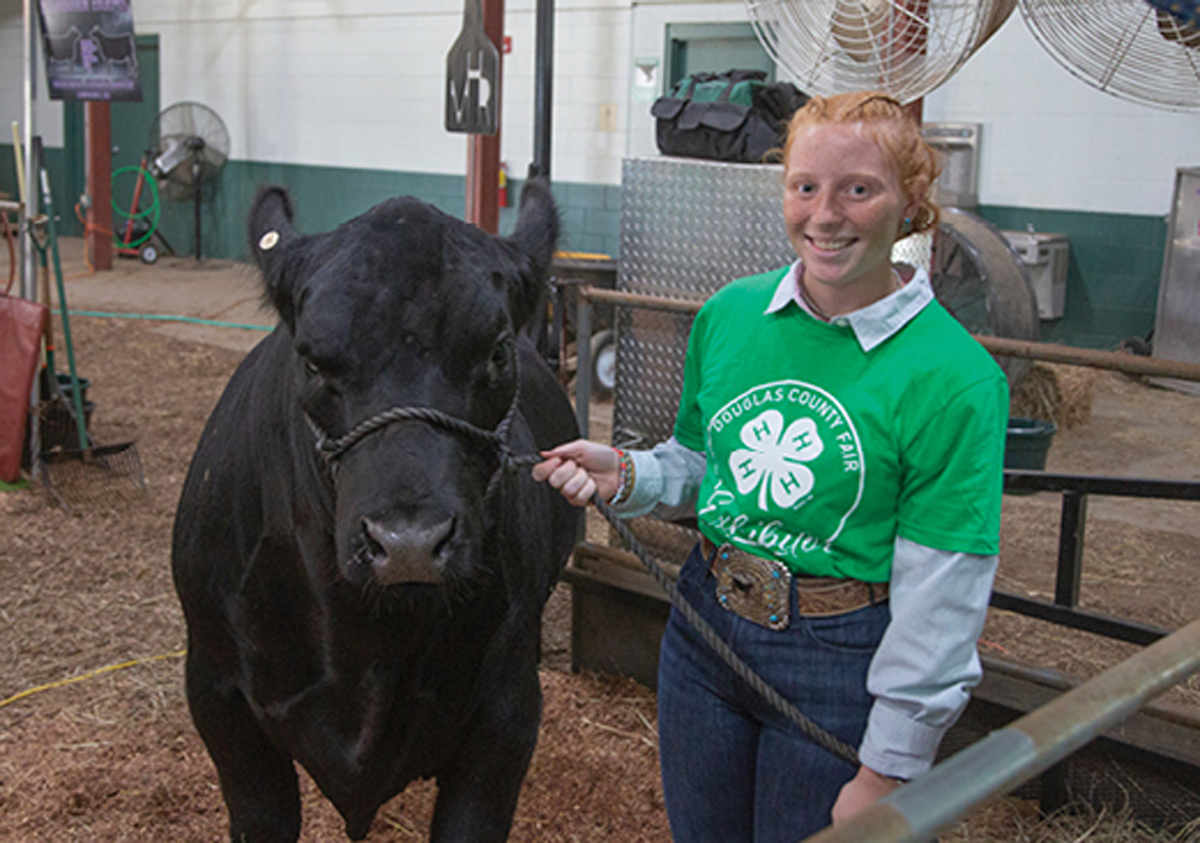
Molly Hill (15) – with Rip, bred owned
Hard Work Pays
“When kids find their spark, you find them really wanting to be with that animal—it’s what they look forward to first thing that morning and when they get home from school,” says Nickie Harding, 4-H youth development agent for the K-State Research and Extension Douglas County with Kansas State University, of the steadfast draw of area youth to the livestock projects.
The 4-H Youth Livestock program fosters responsibility, time management, community and financial literacy as kids work under the guiding values of Head, Heart, Hands and Health (the four “H”s central to the organization) to raise their animals.
LOCAL MATTERS
Our Local Advertisers – Making a Positive Impact
Harding lights up as she describes the joy and self-confidence these kids find in connecting with their animals, “learning more about that animal, not just to exhibit but really knowing and learning about that animal and the benefits of taking care of something other than yourself.”
This past summer, 173 kids in Douglas County participated in the Douglas County Fair’s livestock competition. While some participants chose to raise their various livestock—cattle, horses, pigs, poultry, goats and more—for show, many chose to raise them for the business of breeding or selling, with 118 animals being sold at the end of the week.
Sisters Ruby Hill (age 13) and Molly Hill (age 15) raise their own livestock on their family farm, representing the third generation of their family tree to compete through 4-H in the Douglas County Fair.
“We’ve always grown up doing this, we would go to the nearby farm and help them out with their cows,” says Molly, citing the joyful memories she has as a young girl. “I remember when [my brother]was at the fair, we would lay on my brother’s steer, running around like we had no care in the world.”
Now responsible for their own half-ton animals, the carefree days of playing with their brother’s cattle are long gone. Today, their daily regimen includes morning and evening feedings, twice-daily washings and groomings, clearing droppings from the pens, pouring fresh water into the drinking basin and working with their cattle to exercise and halter them—no matter what the Kansas weather presents. The joy, however, remains.
“It’s not easy, but we love doing it,” Molly beams.
Siblings Jasper Clark (age 14), Evie Clark (age 13) and Jett Clark (age 9) raise and show cattle year-round, selling select steers and heifers at the Douglas County Fair auction. Like the Hill sisters, this trio of siblings rises early every morning to maintain their cattle rain or shine. The workload is large, but the bond they share with each other and with their animals is priceless.
“We work together way better than most siblings,” Evie says of the kids’ family business.
While the dozen or more shows they participate in throughout the year might spark some healthy competition among the siblings, Jasper emphasizes that family comes first, saying, “A win for one of us is a win for the family.”
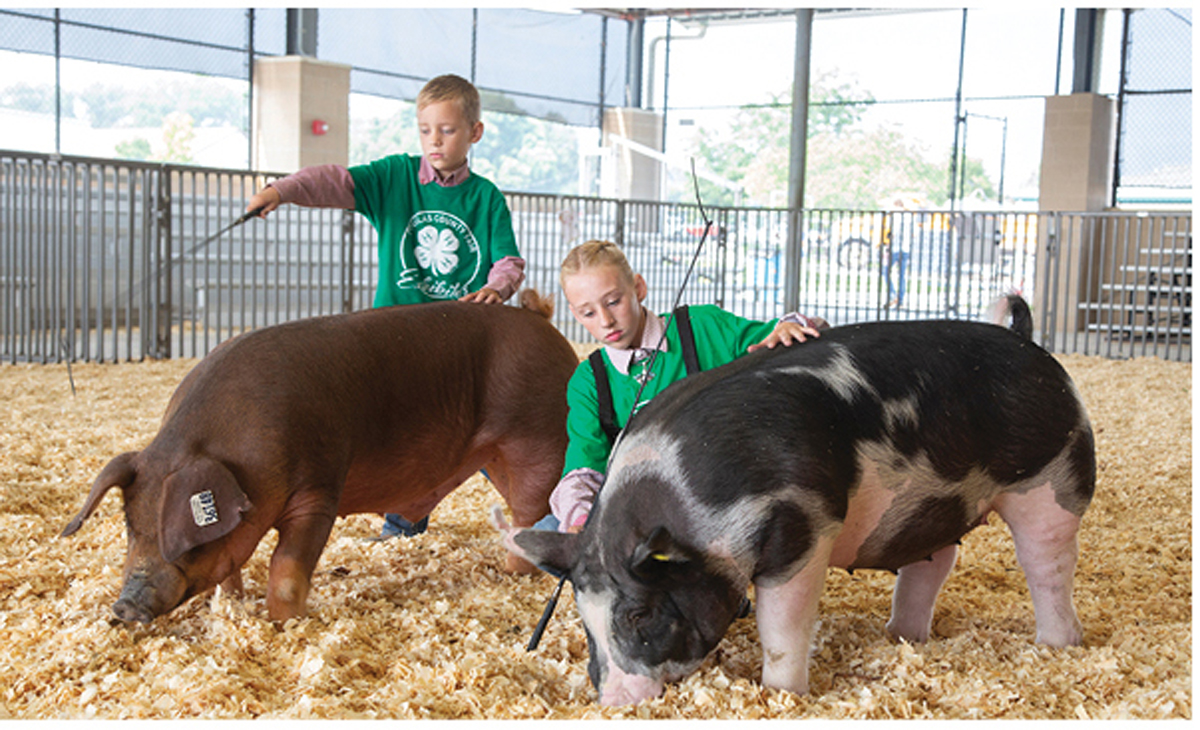
Makenzie Fishburn (12) with Pua, her Berkshire Pig, a gil, and Charlie Fishburn (8) with Maybe, his Duroc Pig, a barrow
Follow the Money
Families may breed their own animals or purchase their animals from trusted ranchers, who sell calves for people like the Hill and Clark kids to raise for show. The calves are usually 6 to 8 months old at the time of purchase, weighing in at roughly 500 pounds.
“I get a new steer every year,” says Ruby, who feeds and cares for each calf herself each day as part of her business plan until it has nearly tripled in weight. “I sell him at the fair, and I get money, and then I save that money to buy another steer.”
As of press time, the price per pound for live cattle is hovering around $3 per pound. For Ruby’s roughly 1,300-pound steer, this would likely result in a sale worth about $3,900.
There is plenty of overhead that goes into raising livestock. Expenses vary greatly by species with food, facilities, grooming supplies, utilities, transportation, veterinary care and training gear—and it adds up quickly, with an animal’s health or lifespan not guaranteed.
Still, the payout can rival or surpass any part-time job many young teens are able to find thanks to the generosity of the county’s dedicated 4-H supporters, who finance special “add-ons” for the kids bringing livestock to auction. Patrons of the Douglas County Fair are given the option to bid on the show animals, offering a premium on top of the market rate for the seller. More than 100 area businesses and individuals donate to the fair to help cover these premiums and encourage local agricultural entrepreneurs in training to continue learning and working the industry.
Cattle aren’t the only animals in this business world.
“Poultry is our largest enrollment,” Harding says. “You don’t necessarily have to live outside of town—the space requirement is small, everything is pretty minimal, plus you can create an egg business. We have kids who sell eggs.”
Meat chickens can sell at the fair for $500 per set of three, while swine currently sell for just under $1 per pound and typically range from 220 to 320 pounds.
Makenzie Fishburn (age 12) and her brother, Charlie Fishburn (age 8), have been raising swine as part of their 4-H livestock projects, taking in 30-pound piglets and helping them grow into 250-pound, prize-worthy swine in roughly six months.
Makenzie says she has learned new skills and adopted different practices over the five years she has been raising swine, modifying nutrition, exercise routines and training techniques along the way.
“Definitely walking my pigs every day,” Makenzie shares of one of her most impactful discoveries in training her animals for shows, “because anytime you don’t work with the pigs, they won’t listen very well.”
Jett, who is in the early years of raising cattle, has been able to take on more responsibility as he grows taller and is more capable of performing some of the physical labor.
“I thought, ‘Whoa! There’s a lot of new things happening here,’” Jett says of his current project versus last year’s. “You have to work with your cow every day, or it’s not going to be a good cow.”
In addition to raising swine, Makenzie has a special interest in raising cattle and looks forward to devoting more time to the steers and heifers (and their progeny) she has become attached to over the years.
“There’s quite a bit that I like to do with the cattle and spend time with them,” she says, adding with a laugh, “I like to lay on my animals and snuggle them.”
Circle of Life
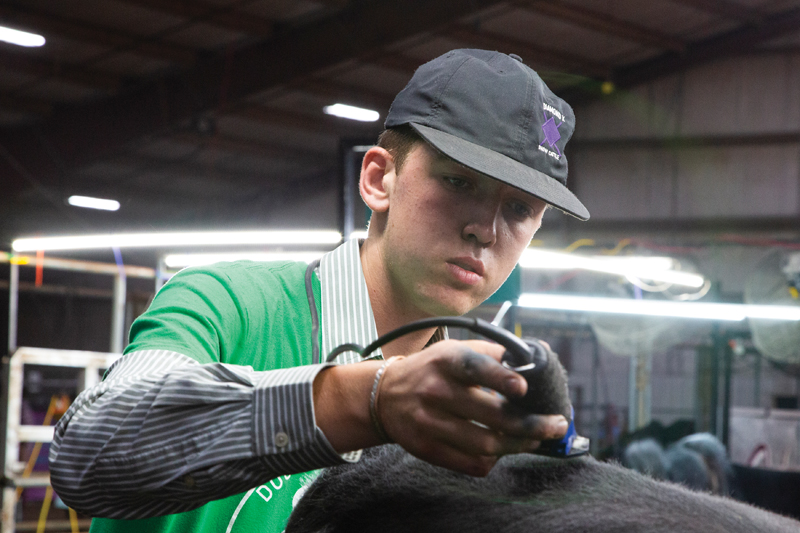
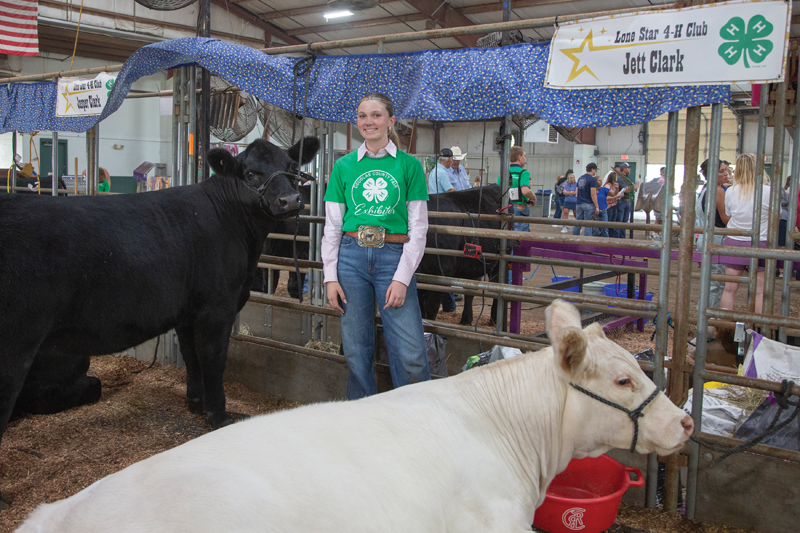
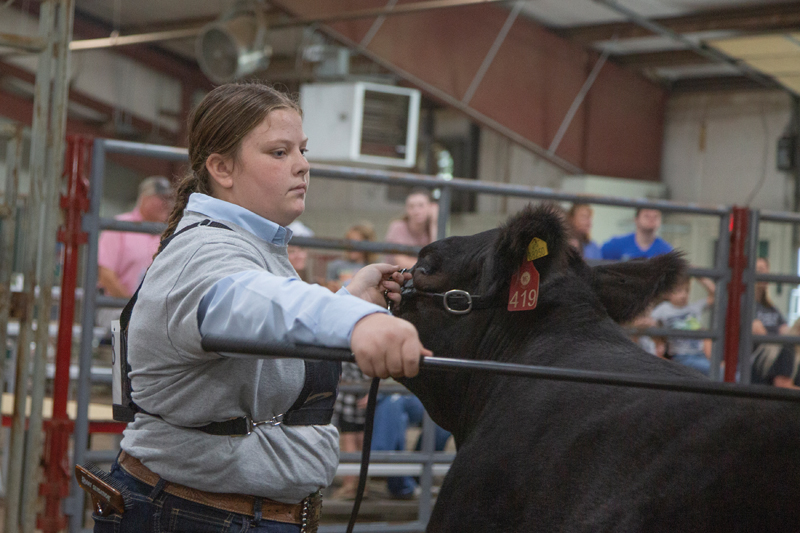
 Top to bottom:
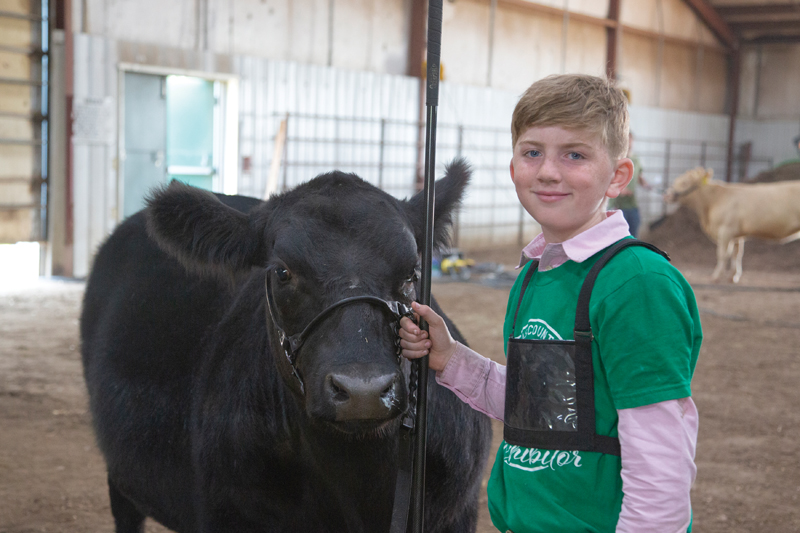
Jasper Clark (14) grooming Margo, his heffer, a pure bred Angus;
Evie Clark (13) with her heffer, Prada, and her brother Jett’s white heffer, Solo;
Ruby Hill (13) – with Laramie, a cross bred steer;
Jett Clark (9) with Biggie, his steer
Just as managing the profits and losses associated with raising market animals provides hands-on experience in the world of business ownership, parting ways with a beloved animal as it heads to market provides a unique experience in the life cycle.
“It is very hard. It doesn’t matter if it is a 7-year-old or an 18-year-old, it never is easy. But they know that is what they’ve decided to do,” Harding says. “If you walk around as you get closer to the end of the fair, you will see kids saying goodbye to their animals. Often, once they go through the ring (for exhibition), they will leave from the fairgrounds and are transferred to a location for market.
“I live in the moment and then deal with it afterwards,” Makenzie says.
Jasper agrees. “You create a connection with them for so long, and you’re with them every single day, but then they’ve got to go. It is sad, but it’s also …”
“… a life lesson,” Evie finishes for her brother.
The kids who struggle with the final farewell often find breeding to be a more gratifying business venture than raising livestock for market.
“I showed a steer one time, and I bawled my eyes out,” says Molly, who now raises breeding heifers and is learning the science of artificial insemination (AI) to be able to breed her own. At this point, Molly says she is too short to be able to perform the AI procedure on her own, as it takes a great deal of physical strength to administer the insemination straw. But she can be hands-on in the selection process, learning an entirely different aspect of the life cycle through her animals.
“I’ve gotten to see eggs through a microscope, which is really cool,” she says, adding that she is able to assess the expected progeny differences (EPDs) of potential parents to breed a more ideal animal. “If the dad has a really clean neck, which is what you’d really want in a show cow, and the mom is a really big build, maybe I want to put those two together.”
Jasper, too, has taken an interest in the science and business of breeding. With the support of his parents and under the guidance of mentors, he is in the process of learning how to administer AI tubes for his own heifers.
The Real World
The skills and education gained from raising livestock are not restricted to the farm, though, as this industry and the training the kids attain during their participation prepare them for the world far beyond their property lines.
“I feel like the main reason we’re doing this is the life lessons, the memories,” Evie says. “We can really succeed in our lives as we get older and really do great things.”
“Between being able to communicate and have conversations, the time-management skills, the responsibility, the skills gained from this project work transfer after they graduate high school, whether they go into the workforce or go on to college,” Harding explains.
The Clark, Fishburn and Hill parents all agree, citing the work ethic and ability to shoulder immense responsibility their kids have gained while working on their livestock projects as perhaps the most valuable aspect of their kids’ formative years.
Through her work with livestock, Molly has become an agricultural advocate, presenting animals and sharing her experiences at area schools for students who might not otherwise get such an insider’s look at the world of farming. Jasper has been active as an agricultural ambassador, connecting with a spectrum of agricultural professionals, from fellow farmers to legislative consultants and decision-makers. And all of the kids who shared their insight plan on working within the agriculture industry in some way down the road.
“We will have kids that go into the animal science field, and then we have kiddos that may go into something else,” Harding says. “Accounting, photography, communications—but the love of that industry is important to them.”
As for these future farms of Douglas County, the doors that will open for them are endless.